 ChipApex | Global Electronic Components Supplier
SEARCH
Search Product
Search Post
— IC芯片 | 连接器 | 传感器 | 被动器件 —
Search productSearch post
— IC芯片 | 连接器 | 传感器 | 被动器件 —
Consult the customer manager about the wholesale price.
consultation hotline:86-132-6715-2157
email:[email protected]
Contact the product manager for consultation. One-stop consultation is available.
Do you want a lower wholesale price? Please send us your inquiry and we will reply immediately.
The ISL21060BFH625Z-TK is a precision voltage reference utilizing Intersil's proprietary Floating Gate Analog (FGA) technology. It provides a fixed output of 2.500V with an initial accuracy of ±1.0mV and a temperature coefficient of 10ppm/°C. The device operates within an input voltage range of 2.7V to 5.5V, drawing a maximum supply current of 40µA. It features a low noise profile of 10µVP-P in the 0.1Hz to 10Hz bandwidth and includes an active-high enable pin that reduces shutdown current to less than 1.5µA. Packaged in a 6-lead SOT-23, it supports an operating temperature range from -40°C to +125°C.
Verify the specific suffix Z-TK indicates tape and reel packaging configuration. Confirm the BFH designation corresponds to the 2.500V output option with B-grade accuracy. Ensure the component matches the 6-lead SOT-23 package outline P6.064A. Check for RoHS compliance status as specified in the ordering information notes.
Select this component when ultra-low power consumption is critical alongside high precision requirements. The FGA technology offers superior stability compared to standard bandgap references. Consider the Kelvin sensing pins if trace resistance impacts system accuracy. Evaluate the 300µs turn-on time against system sequencing requirements.
This part belongs to the ISL21060 family of micropower voltage references manufactured by Renesas Electronics Corporation, formerly Intersil. The series utilizes floating gate CMOS processes to achieve performance characteristics distinct from conventional reference architectures. The BFH625 variant specifically targets applications requiring a stable 2.5V reference with tight tolerance specifications.
ISL21060CFH625Z-TK: Offers identical electrical parameters but with a relaxed initial accuracy of ±2.5mV and a higher temperature coefficient of 25ppm/°C.
When the enable pin is driven low, the output shuts down and supply current drops below 1.5µA. However, the internal reference circuitry remains biased at a highly accurate state, allowing for rapid reactivation.
These pins provide Kelvin sensing capability. VOUTF drives the voltage to the load, while VOUTS senses the actual voltage at the load point, compensating for voltage drops across PCB traces.
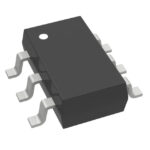 ISL21060BFH625Z-TK
The activity of extra discounts on wholesale prices is in full swing…
Please fill in your contact information and we will send you the latest wholesale price list.






