 ChipApex | Global Electronic Components Supplier
SEARCH
Search Product
Search Post
— IC芯片 | 连接器 | 传感器 | 被动器件 —
Search productSearch post
— IC芯片 | 连接器 | 传感器 | 被动器件 —
Consult the customer manager about the wholesale price.
consultation hotline:86-132-6715-2157
email:[email protected]
Contact the product manager for consultation. One-stop consultation is available.
Do you want a lower wholesale price? Please send us your inquiry and we will reply immediately.
The ISL6144IR-T is a high-voltage ORing MOSFET controller manufactured by Renesas Electronics Corporation. Designed for telecommunication and datacom applications, it operates within a bias voltage range of 9V to 75V and withstands transients up to 100V. The device replaces conventional diodes to minimize power loss in load-sharing or automatic-switchover configurations. It features short-circuit protection with adjustable trip levels and status indication outputs.
Verify component authenticity through authorized channels as the part may be subject to end-of-life notices. Confirm RoHS3 compliance and moisture sensitivity level prior to assembly. Check current distributor availability as stock status varies. Ensure design compatibility with the specific voltage requirements of the target application before procurement.
Select this controller for high-voltage applications requiring efficient power redundancy. It is suitable where minimizing voltage drop across the ORing path is critical compared to Schottky diode solutions. Consider the 9V to 75V operating range and 100V transient tolerance when designing for telecom or datacom environments.
The ISL6144 series addresses the efficiency limitations of traditional diode-based ORing circuits. By utilizing external MOSFETs controlled by this IC, designers achieve lower forward voltage drops and reduced thermal dissipation. This family supports robust power management in systems demanding high reliability and efficient load balancing between multiple input sources.
Public confirmed substitute part numbers are not available in the provided documentation. Verify if the ISL6146 serves as a functional alternative for low-voltage applications, noting the distinct voltage ranges and package differences between the high-voltage ISL6144 and low-voltage ISL6146 variants.
The ISL6144 is designed to handle transient voltages up to 100V while operating within its standard bias voltage range.
It reduces power losses from approximately 10-14W to around 3W at 20A by controlling an external MOSFET with low on-resistance instead of relying on the forward voltage drop of a diode.
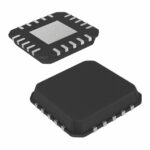 ISL6144IR-T
The activity of extra discounts on wholesale prices is in full swing…
Please fill in your contact information and we will send you the latest wholesale price list.





