 ChipApex | Global Electronic Components Supplier
SEARCH
Search Product
Search Post
— IC芯片 | 连接器 | 传感器 | 被动器件 —
Search productSearch post
— IC芯片 | 连接器 | 传感器 | 被动器件 —
Consult the customer manager about the wholesale price.
consultation hotline:86-132-6715-2157
email:[email protected]
Contact the product manager for consultation. One-stop consultation is available.
Do you want a lower wholesale price? Please send us your inquiry and we will reply immediately.
The ISO1042BQDWVRQ1 is an automotive-grade isolated CAN transceiver manufactured by Texas Instruments. It integrates a high-speed CAN transceiver with a digital isolator to provide galvanic isolation for robust communication in noisy environments. The device supports data rates up to 5 Mb/s and operates within a supply voltage range of 1.71 V to 5.5 V. It features AEC-Q100 qualification for automotive applications, ensuring reliability under harsh conditions. The component includes ESD protection rated at 16 kV and functions across an extended temperature range from -40°C to +125°C. Packaged in an SOIC-8 surface-mount format, it offers a propagation delay of 76 ns and consumes 43 mA during operation.
Verify the complete part number including suffixes such as 'R' for reel packaging when ordering. Confirm that the specific variant matches the required automotive qualification standards and package type. Ensure compatibility with existing board layouts for SOIC-8 footprints. Check for moisture sensitivity levels prior to soldering processes. Validate supplier authenticity through authorized distribution channels to guarantee component integrity.
Select this component when designing automotive CAN interfaces requiring integrated isolation without external components. Consider the 5 Mb/s speed limit and SOIC-8 package constraints against system requirements. Evaluate the 1.71 V to 5.5 V operating voltage range for compatibility with available power rails. Assess thermal dissipation needs given the 385 mW power dissipation rating in enclosed spaces.
This device belongs to the ISO1042 family of isolated CAN transceivers from Texas Instruments. It shares functional similarities with other members like the ISO1042QDWVRQ1 but may differ in specific manufacturing batches or minor parameter tolerances defined by the manufacturer. The series is designed specifically for automotive applications meeting stringent reliability standards.
The ISO1042QDWVRQ1 serves as a closely related alternative within the same product family. Verify pinout compatibility and exact electrical specifications before substitution. Ensure any replacement maintains the required AEC-Q100 automotive qualification level.
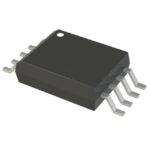 ISO1042BQDWVRQ1
The activity of extra discounts on wholesale prices is in full swing…
Please fill in your contact information and we will send you the latest wholesale price list.