ChipApex | Global Electronic Components Supplier

SEARCH
Search Product
Search Post
— IC芯片 | 连接器 | 传感器 | 被动器件 —
Search productSearch post
— IC芯片 | 连接器 | 传感器 | 被动器件 —
Consult the customer manager about the wholesale price.
consultation hotline:86-132-6715-2157
email:[email protected]
Contact the product manager for consultation. One-stop consultation is available.
Do you want a lower wholesale price? Please send us your inquiry and we will reply immediately.
The ISO122P is a precision, low-cost isolation amplifier manufactured by Texas Instruments. It features a single channel with capacitive and galvanic isolation technology. Key electrical specifications include an insulation voltage of 1500 Vrms, a 3dB bandwidth of 50 kHz, and a common-mode rejection ratio (CMRR) of 140 dB. The device operates on a supply voltage ranging from 4.5 V to 18 V, with a maximum power supply voltage of 18 V. It has a typical input offset voltage (Vos) of 20 mV and a gain error of 0.02%. The component draws 5.5 mA of operating current and supports output currents up to 15 mA per channel. It is housed in an 8-PDIP package for through-hole mounting.
Verify the specific ordering suffix and package variant against the official datasheet before procurement. Confirm that the 8-PDIP through-hole package matches the target PCB layout requirements. Ensure the supply voltage range aligns with the system design constraints. Check for any recent product change notifications regarding manufacturing sites or materials. Validate compliance with relevant environmental standards such as RoHS directives.
Select this component when a single-channel isolation amplifier with high CMRR is required. Consider the 50 kHz bandwidth limit for signal frequency compatibility. Evaluate the 1500 Vrms isolation rating against system safety requirements. Compare the 8-PDIP package size with available board space. Assess the 5.5 mA quiescent current impact on overall power consumption.
The ISO122P belongs to the ISO122 series of isolation amplifiers from Texas Instruments. This series is designed for applications demanding precise analog signal transmission across isolation barriers. The part integrates both the amplifier and isolation barrier into a single monolithic structure. It serves as a cost-effective alternative to discrete isolation solutions. The series supports various packaging options including surface mount and through-hole configurations.
Consult the official datasheet for direct pin-to-pin replacements within the ISO122 family. Verify functional equivalence for isolation voltage and bandwidth specifications. Cross-reference package dimensions for mechanical compatibility. Review updated documentation for any changes in recommended operating conditions.
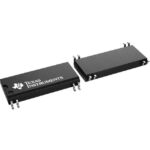 ISO122P

The activity of extra discounts on wholesale prices is in full swing…
Please fill in your contact information and we will send you the latest wholesale price list.