ChipApex | Global Electronic Components Supplier

SEARCH
Search Product
Search Post
— IC芯片 | 连接器 | 传感器 | 被动器件 —
Search productSearch post
— IC芯片 | 连接器 | 传感器 | 被动器件 —
Consult the customer manager about the wholesale price.
consultation hotline:86-132-6715-2157
email:[email protected]
Contact the product manager for consultation. One-stop consultation is available.
Do you want a lower wholesale price? Please send us your inquiry and we will reply immediately.
The ISO122UE4 is a precision isolation amplifier from Texas Instruments, utilizing duty cycle modulation-demodulation across a 2-pF differential capacitive barrier. It features a fixed unity gain configuration with a 50-kHz signal bandwidth and 140 dB common-mode rejection at 60 Hz. The device supports bipolar operation with ±10 V output swing and operates on supply voltages ranging from ±4.5 V to ±18 V. It offers 0.020% maximum nonlinearity and is rated for 1500 Vrms continuous isolation voltage. Available in an 8-lead SOIC package.
Verify the specific suffix 'E4' corresponds to the lead-free and RoHS-compliant version as documented by Texas Instruments. Confirm the package type matches the required 8-lead SOIC form factor. Ensure the operating temperature range aligns with the specified -25°C to 85°C limits for your application environment. Cross-reference the datasheet revision date to confirm current electrical characteristics and pinout definitions.
Select this component when a cost-effective, high-reliability isolation solution with fixed unity gain is required. It is suitable for applications demanding high common-mode immunity and precise analog signal transmission across galvanic barriers. Consider the 50-kHz bandwidth limit for high-frequency signal integrity. Evaluate thermal resistance metrics if operating near maximum temperature limits or in enclosed spaces without adequate airflow.
The ISO122 belongs to the ISO122 family of precision isolation amplifiers manufactured by Texas Instruments. This series utilizes a novel duty cycle modulation technique to transmit signals digitally across a capacitive barrier, ensuring excellent reliability and transient immunity. The family includes variants such as the ISO122U and ISO122P, differing primarily in packaging options like SOIC and PDIP.
ISO122U/1K
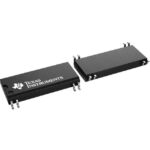 ISO122UE4

The activity of extra discounts on wholesale prices is in full swing…
Please fill in your contact information and we will send you the latest wholesale price list.