ChipApex | Global Electronic Components Supplier

SEARCH
Search Product
Search Post
— IC芯片 | 连接器 | 传感器 | 被动器件 —
Search productSearch post
— IC芯片 | 连接器 | 传感器 | 被动器件 —
Consult the customer manager about the wholesale price.
consultation hotline:86-132-6715-2157
email:[email protected]
Contact the product manager for consultation. One-stop consultation is available.
Do you want a lower wholesale price? Please send us your inquiry and we will reply immediately.
The ISO124P is a precision, low-cost isolation amplifier manufactured by Texas Instruments. It features a single channel with capacitive and galvanic isolation types. The device operates within a supply voltage range of 9 V to 36 V and supports a maximum supply voltage of 18 V in specific configurations. Key electrical parameters include a 50 kHz -3dB bandwidth, a common-mode rejection ratio (CMRR) of 140 dB, and an input offset voltage of 50 mV. It provides a high output current capability of up to 188 mA at low levels and functions reliably across a temperature range from -25°C to +85°C.
Verify the exact suffix designation when ordering, as packaging options such as tubes or reels may vary. Confirm that the component meets RoHS compliance standards required for your region. Ensure the selected package type matches your PCB footprint requirements. Check for any recent product change notifications regarding manufacturing site updates before finalizing procurement plans.
Select this component when high precision and cost-effectiveness are prioritized over ultra-high speed applications. The 50 kHz bandwidth limits suitability for high-frequency switching signals. Consider the 140 dB CMRR for environments with significant ground potential differences. Evaluate the SOIC-8 package constraints against available board space and thermal dissipation needs.
The ISO124P belongs to the ISO124 family of isolation amplifiers from Texas Instruments. This series is designed to replace traditional transformer-based isolators with more compact semiconductor solutions. It shares functional similarities with other precision isolation devices but distinguishes itself through its specific combination of low cost and high accuracy metrics.
Direct substitutes include the ISO124U/1K and ISO124UE4. These variants share identical core specifications but differ primarily in packaging formats such as tape-and-reel or tube configurations. Verify pin compatibility and thermal characteristics before swapping packages.
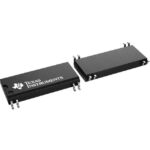 ISO124P

The activity of extra discounts on wholesale prices is in full swing…
Please fill in your contact information and we will send you the latest wholesale price list.