 ChipApex | Global Electronic Components Supplier

SEARCH
Search Product
Search Post
— IC芯片 | 连接器 | 传感器 | 被动器件 —
Search productSearch post
— IC芯片 | 连接器 | 传感器 | 被动器件 —
Consult the customer manager about the wholesale price.
consultation hotline:86-132-6715-2157
email:[email protected]
Contact the product manager for consultation. One-stop consultation is available.
Do you want a lower wholesale price? Please send us your inquiry and we will reply immediately.
The ISP827ASMT&R is a high-density mounting phototransistor optically coupled isolator manufactured by Isocom Components. It features a dual-channel configuration housed in an 8-pin DIP plastic package, designed for surface mount technology applications. The device provides a minimum isolation voltage of 5300 Vrms between input and output circuits. Key electrical parameters include a maximum forward current of 50 mA, a collector-emitter breakdown voltage of at least 35 V, and a maximum dark power dissipation of 100 nA. The unit operates within a temperature range of -55 °C to 100 °C and complies with UL recognition (File No. E91231) and VDE 0884 standards.
Verify the specific suffix 'A' against official Isocom documentation to confirm lead frame plating or material specifications. Ensure the 'SMT&R' designation matches the required reel packaging format for surface mount assembly lines. Cross-reference the VDE and UL file numbers directly with certification bodies to validate compliance status for your target market regulations before finalizing procurement orders.
Select this component when dual-channel isolation is required in a small footprint. Compare the 5300 Vrms isolation rating against system safety requirements. Evaluate the -55 °C to 100 °C operating range against environmental conditions. Confirm that the phototransistor output type aligns with the receiving circuit's logic or analog interface needs rather than using logic gate outputs.
This part belongs to the ISP827 series of high-density phototransistor optocouplers from Isocom Components. The series offers various lead forms including standard through-hole and surface mount options. These devices are engineered as replacements for legacy components while maintaining compatibility with existing PCB layouts and manufacturing processes.
Consult official Isocom substitution guides for direct pin-compatible alternatives. Verify that any substitute maintains the same 5300 Vrms isolation rating and dual-channel configuration. Ensure thermal and electrical characteristics match the original design constraints.
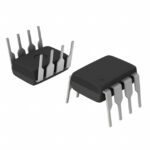 ISP827ASMT&R

The activity of extra discounts on wholesale prices is in full swing…
Please fill in your contact information and we will send you the latest wholesale price list.





