 ChipApex | Global Electronic Components Supplier

SEARCH
Search Product
Search Post
— IC芯片 | 连接器 | 传感器 | 被动器件 —
Search productSearch post
— IC芯片 | 连接器 | 传感器 | 被动器件 —
Consult the customer manager about the wholesale price.
consultation hotline:86-132-6715-2157
email:[email protected]
Contact the product manager for consultation. One-stop consultation is available.
Do you want a lower wholesale price? Please send us your inquiry and we will reply immediately.
The ISPLSI-2032-150LJ is an Electrically Erasable Programmable Logic Device (EE PLD) manufactured by Lattice Semiconductor. It features a propagation delay of 10 ns and operates within a commercial temperature range of 0°C to 70°C. The device supports a maximum clock frequency of 100 MHz with a rated supply voltage of 5 V, operating between 4.75 V and 5.25 V. It contains 32 I/O pins organized as 0 dedicated inputs and 32 general-purpose I/Os utilizing MACROCELL output functionality. The component is housed in a 44-pin Plastic Quad Flat Package (PQFP) or Thin Quad Flat Package (TQFP), classified under JEDEC code S-PQFP-G44.
Verify the specific package variant against the datasheet, as the model designation may correspond to either PQFP or TQFP form factors. Confirm that the application environment remains within the specified commercial temperature limits of 0°C to 70°C. Ensure power supply stability stays within the 4.75 V to 5.25 V range to maintain the 10 ns timing specifications. Check for moisture sensitivity level 3 requirements during storage and reflow soldering processes.
Select this component when a 5 V EE PLD with 32 I/Os and 10 ns speed is required. Consider alternative Lattice families like ispMACH 4000 if JTAG boundary scan compliance is necessary, as the 2000E/V series typically lacks full IEEE-1149.1 register support. Evaluate pin count constraints carefully, as the 44-pin package offers limited unused pins for the 32 I/O configuration.
This part belongs to the Lattice ispLSI 2000 family, which utilizes non-volatile EEPROM technology for in-system programmability. Unlike the later ispMACH 4000 series, devices in this generation are generally considered 1149.1 compatible rather than fully compliant due to the absence of standard boundary scan registers. The architecture combines the density of the ispLSI 1000EA with improved performance characteristics.
Direct pin-compatible replacements within the same family include the ISPLSI2032A-150LT48I, noting the package difference between TQFP and PQFP. Verify that any substitute maintains the 5 V I/O tolerance and 10 ns delay specification.
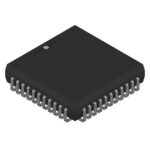 ISPLSI-2032-150LJ

The activity of extra discounts on wholesale prices is in full swing…
Please fill in your contact information and we will send you the latest wholesale price list.





