 ChipApex | Global Electronic Components Supplier

SEARCH
Search Product
Search Post
— IC芯片 | 连接器 | 传感器 | 被动器件 —
Search productSearch post
— IC芯片 | 连接器 | 传感器 | 被动器件 —
Consult the customer manager about the wholesale price.
consultation hotline:86-132-6715-2157
email:[email protected]
Contact the product manager for consultation. One-stop consultation is available.
Do you want a lower wholesale price? Please send us your inquiry and we will reply immediately.
The ispLSI 3192-100LQ is a high-density Complex Programmable Logic Device (CPLD) manufactured by Lattice Semiconductor. It features 192 macrocells, 32 I/O pins, and 9000 usable gates organized into 24 Logic Array Blocks (LABs). The device operates at a maximum frequency of 100 MHz with a typical propagation delay of 10 ns. It utilizes EEPROM storage technology for non-volatile configuration and requires a 5 V supply voltage ranging from 4.75 V to 5.25 V. The component is housed in a PQFP-240 surface-mount package and supports an operating temperature range of 0°C to +70°C.
The ispLSI 3192-100LQ is listed as discontinued or end-of-life by the manufacturer. Availability is restricted, and current stock levels are limited. Verification of authenticity and condition is critical when sourcing from secondary markets due to the component's age and discontinuation status.
Select this component for designs requiring moderate density CPLD capabilities with non-vatile configuration. Ensure the system design accommodates the 5 V power supply requirement and the physical dimensions of the PQFP-240 package. Consider the 100 MHz speed limit for timing closure in synchronous designs.
This part belongs to the ispLSI 3000/5000 family of CPLDs, which introduced In-System Programmability using EEPROM technology. It serves as a bridge between low-density GALs and higher-density FPGA solutions, offering deterministic timing and reprogrammability without the volatility of SRAM-based FPGAs.
Direct pin-to-pin replacements may be limited due to discontinuation. Verify compatibility with newer ispLSI series or ispMACH families, noting differences in I/O standards, voltage requirements, and macrocell architectures.
It uses EEPROM (Electrically Erasable Programmable Read-Only Memory) for storing the configuration data, allowing for non-volatile operation and multiple reprogramming cycles.
Yes, the device supports In-System Programming (ISP) and includes a Test Access Port (TAP) that is compliant with the IEEE 1149.1 boundary scan standard.
The maximum operating frequency is 100 MHz, with a typical propagation delay of 10 ns.
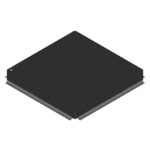 ISPLSI-3192-100LQ

The activity of extra discounts on wholesale prices is in full swing…
Please fill in your contact information and we will send you the latest wholesale price list.





