 ChipApex | Global Electronic Components Supplier
SEARCH
Search Product
Search Post
— IC芯片 | 连接器 | 传感器 | 被动器件 —
Search productSearch post
— IC芯片 | 连接器 | 传感器 | 被动器件 —
Consult the customer manager about the wholesale price.
consultation hotline:86-132-6715-2157
email:[email protected]
Contact the product manager for consultation. One-stop consultation is available.
Do you want a lower wholesale price? Please send us your inquiry and we will reply immediately.
The Littelfuse K2400G is a silicon bilateral voltage-triggered switch belonging to the Kxxxzy SIDAC series. It features glass-passivated junctions for ruggedness in harsh environments. The device switches on through a negative resistance region when the applied voltage exceeds its breakover point, maintaining conduction until current drops below the holding threshold. Key electrical parameters include a breakover voltage (VBO) range of 220 V to 250 V and a repetitive peak off-state voltage (VDRM) of 190 V. It supports an on-state RMS current of 1 A at 50/60 Hz and can withstand a single-cycle non-repetitive surge current of 20 A at 60 Hz. The component operates within a junction temperature range of -40°C to 125°C and utilizes a DO-15 through-hole package.
Verify the specific ordering suffix against the manufacturer's datasheet to confirm the exact package type and packaging mode. The standard G suffix indicates a DO-15 through-hole package supplied in bulk quantities. Ensure the selected variant matches the required circuit function and lead form dimensions for proper integration into the target assembly process.
Select the K2400G based on the required breakover voltage range of 220 V to 250 V and the need for a 190 V blocking capability. Consider the thermal resistance characteristics and maximum allowable case temperature curves when designing for continuous RMS current loads. Ensure the application circuit limits the di/dt and dv/dt within the specified critical rates to prevent device damage during switching events.
The K2400G is part of the Littelfuse Kxxxzy Standard Bidirectional SIDAC family. This series includes various voltage ratings ranging from 79 V to 330 V and different package options such as DO-15, DO-214, and TO-92. The K2400G specifically addresses applications requiring mid-range triggering voltages with robust surge handling capabilities in a traditional axial leaded format.
Compatible substitutes within the same family include K2300G and K2500G, which offer similar specifications with slightly different breakover voltage ranges. Verify that any replacement maintains the required VBO, VDRM, and IT(RMS) ratings for the specific circuit design.
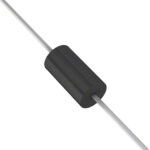 K2400G
The activity of extra discounts on wholesale prices is in full swing…
Please fill in your contact information and we will send you the latest wholesale price list.





