ChipApex | Global Electronic Components Supplier

SEARCH
Search Product
Search Post
— IC芯片 | 连接器 | 传感器 | 被动器件 —
Search productSearch post
— IC芯片 | 连接器 | 传感器 | 被动器件 —
Consult the customer manager about the wholesale price.
consultation hotline:86-132-6715-2157
email:[email protected]
Contact the product manager for consultation. One-stop consultation is available.
Do you want a lower wholesale price? Please send us your inquiry and we will reply immediately.
The KA324ADTF is a quad operational amplifier manufactured by onsemi, housed in a 14-lead Small Outline (SOIC) surface-mount package. It features four independent high-gain amplifiers designed for versatile analog signal processing applications. The device operates within a wide single or dual power supply voltage range of 3 V to 32 V. Key electrical characteristics include a typical supply current of 1 mA per amplifier and a slew rate of 0.5 V/µs. The input offset voltage is typically 2 mV, with an input bias current of 20 nA. The output short-circuit current is limited to 40 mA, ensuring protection during fault conditions.
Verify the specific suffix 'ADTF' against the official onsemi datasheet to confirm the tape-and-reel packaging configuration and temperature grade. Ensure the ordering part number matches the required package style and compliance standards. Cross-reference the manufacturer's latest documentation to confirm availability and any potential obsolescence notices before finalizing procurement plans.
Select this component when a quad op-amp solution is required in a small surface-mount package. It is suitable for general-purpose analog applications where moderate speed and low power consumption are prioritized. Consider the input offset voltage and bandwidth requirements relative to the application needs. Compare with other quad op-amps in the family if different packaging or performance trade-offs are necessary.
The KA324 series belongs to onsemi's legacy line of quad operational amplifiers, widely used in industrial and consumer electronics. The 'KA' prefix often denotes specific regional or legacy manufacturing origins, while '324' indicates the quad topology. This series provides a cost-effective alternative to newer generations for standard analog functions, maintaining compatibility with existing designs that utilize the classic LM324 pinout.
Direct replacements include the LM324N, TL324, and MC33074, provided pin compatibility and electrical specifications meet the design requirements. Verify that substitute parts offer equivalent supply voltage ranges and output drive capabilities. Check for any differences in package dimensions or thermal characteristics when transitioning between manufacturers.
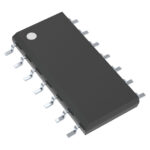 KA324ADTF

The activity of extra discounts on wholesale prices is in full swing…
Please fill in your contact information and we will send you the latest wholesale price list.