 ChipApex | Global Electronic Components Supplier
SEARCH
Search Product
Search Post
— IC芯片 | 连接器 | 传感器 | 被动器件 —
Search productSearch post
— IC芯片 | 连接器 | 传感器 | 被动器件 —
Consult the customer manager about the wholesale price.
consultation hotline:86-132-6715-2157
email:[email protected]
Contact the product manager for consultation. One-stop consultation is available.
Do you want a lower wholesale price? Please send us your inquiry and we will reply immediately.
The KA431DTF is a programmable shunt voltage regulator manufactured by onsemi. It functions as a precision reference and error amplifier, utilizing an internal 2.5V bandgap reference to regulate output voltage via an external resistor divider. The device operates within a cathode current range of 1mA to 100mA and supports a supply voltage range from 2.5V to 36V. It features low dynamic impedance and high bandwidth for stable feedback loop performance. The component is housed in a compact SOT-23 surface-mount package, suitable for space-constrained designs requiring precise voltage regulation.
Verify the specific suffix 'DTF' against the manufacturer's official datasheet to confirm the exact tape-and-reel packaging quantity and marking codes. Ensure the procurement source provides documentation confirming RoHS compliance and material declarations consistent with onsemi standards. Cross-reference the date code and lot traceability requirements with your quality assurance protocols before finalizing orders.
Select this component when a low-cost, high-precision shunt regulator is required for feedback loops or reference generation. Consider the thermal performance and maximum cathode current limits relative to the expected dissipation in the application. Evaluate the need for the specific SOT-23 footprint and ensure the operating voltage range aligns with the system's supply rails.
The KA431 series belongs to a family of programmable shunt regulators widely used in analog control applications. These devices serve as alternatives to Zener diodes, offering superior accuracy and temperature stability. The KA431 variant specifically integrates the reference and amplifier on a single monolithic chip, simplifying circuit design compared to discrete solutions while maintaining industry-standard pinouts for easy replacement.
Compatible substitutes include the TL431 and LM431, which share identical electrical characteristics and pin configurations. Verify that any alternative part meets the same AEC-Q101 qualification if automotive reliability is required. Confirm that the replacement device offers equivalent dynamic impedance and bandwidth specifications to ensure loop stability in existing designs.
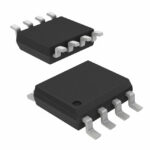 KA431DTF
The activity of extra discounts on wholesale prices is in full swing…
Please fill in your contact information and we will send you the latest wholesale price list.






