 ChipApex | Global Electronic Components Supplier
SEARCH
Search Product
Search Post
— IC芯片 | 连接器 | 传感器 | 被动器件 —
Search productSearch post
— IC芯片 | 连接器 | 传感器 | 被动器件 —
Consult the customer manager about the wholesale price.
consultation hotline:86-132-6715-2157
email:[email protected]
Contact the product manager for consultation. One-stop consultation is available.
Do you want a lower wholesale price? Please send us your inquiry and we will reply immediately.
The KBA-20+ is a surface-mount frequency doubler manufactured by Mini-Circuits. It operates within a frequency range of 1.6 GHz to 4.8 GHz, effectively doubling the input signal frequency. The component features a nominal coupling of 20 dB and a mainline loss of 2 dB. It supports up to 2 W of power handling capability. The device utilizes an MCLP-4 package for SMD/SMT installation. It functions as a general-purpose RF IC designed for harmonic generation applications in microwave circuits.
Verify the specific datasheet version for the KBA-20+ to confirm electrical parameters against current production standards. Ensure that the application environment remains within the specified 1.6 GHz to 4.8 GHz operational range. Confirm that the required power levels do not exceed the 2 W limit. Check compatibility with the MCLP-4 footprint during PCB layout. Validate thermal management requirements for continuous operation at maximum power.
Select the KBA-20+ when a fixed frequency doubling function is required between 1.6 GHz and 4.8 GHz. This component is suitable for designs needing 20 dB coupling with low mainline loss. Consider the surface-mount package for automated assembly processes. Evaluate the 2 W power rating against system signal levels. Compare performance metrics with alternative multipliers if broader bandwidth or different coupling values are necessary.
The KBA-20+ belongs to Mini-Circuits' family of surface-mount RF components. It is categorized under frequency multipliers and doublers. The device complements other passive and active RF elements like attenuators and mixers. Its design focuses on integration into compact microwave systems. The component supports standard manufacturing processes for high-volume electronic assemblies.
Public confirmed substitute part numbers are not available in the provided documentation. Verify functional equivalence carefully if considering alternatives. Ensure replacement components match the 1.6–4.8 GHz frequency range and 20 dB coupling requirement. Check package compatibility with existing PCB footprints. Confirm power handling capabilities meet system specifications.
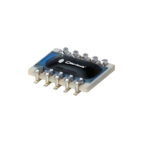 KBA-20+
The activity of extra discounts on wholesale prices is in full swing…
Please fill in your contact information and we will send you the latest wholesale price list.





