ChipApex | Global Electronic Components Supplier

SEARCH
Search Product
Search Post
— IC芯片 | 连接器 | 传感器 | 被动器件 —
Search productSearch post
— IC芯片 | 连接器 | 传感器 | 被动器件 —
Consult the customer manager about the wholesale price.
consultation hotline:86-132-6715-2157
email:[email protected]
Contact the product manager for consultation. One-stop consultation is available.
Do you want a lower wholesale price? Please send us your inquiry and we will reply immediately.
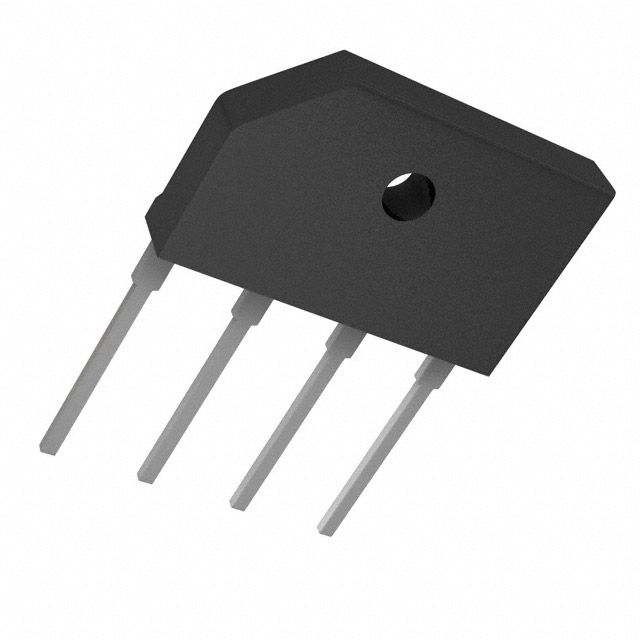
The KBJ406G is a single-phase standard recovery bridge rectifier manufactured by Diodes Incorporated. It provides an average rectified output current of 4.0 A and supports a maximum repetitive peak reverse voltage of 600 V. The device features a forward voltage drop of 1.0 V at 2.0 A and a maximum reverse leakage current of 5.0 µA at rated temperature. It operates within a junction temperature range of -55°C to +150°C and withstands a peak forward surge current of 120 A. The component utilizes glass passivated die construction, offers high case dielectric strength of 1500 VRMS, and is housed in a through-hole KBJ package.
Verify the specific ordering information against official manufacturer documentation before procurement. Confirm that the requested part number matches the exact electrical ratings required for the target application. Ensure compliance with relevant environmental directives such as RoHS standards during the purchasing process. Cross-reference datasheet revisions to confirm mechanical dimensions and marking codes align with assembly requirements.
Select this component when a 600 V blocking capability is required for 4 A continuous current applications. Evaluate thermal management needs based on the specified thermal resistance from junction to case. Consider the operating temperature range limits for environments exceeding standard ambient conditions. Verify that the through-hole mounting style fits the intended PCB layout constraints.
This component belongs to the KBJ4005G through KBJ410G series of standard recovery bridge rectifiers. All members share identical physical packaging and thermal characteristics while differing primarily in their maximum repetitive peak reverse voltage ratings. The series is designed for general-purpose rectification tasks where moderate speed and high current capacity are necessary.
Direct replacements must match the 600 V reverse voltage, 4.0 A current rating, and KBJ package outline. Verify that substitute components maintain equivalent forward voltage and leakage current specifications to ensure circuit performance consistency.
 KBJ406G

The activity of extra discounts on wholesale prices is in full swing…
Please fill in your contact information and we will send you the latest wholesale price list.