ChipApex | Global Electronic Components Supplier

SEARCH
Search Product
Search Post
— IC芯片 | 连接器 | 传感器 | 被动器件 —
Search productSearch post
— IC芯片 | 连接器 | 传感器 | 被动器件 —
Consult the customer manager about the wholesale price.
consultation hotline:86-132-6715-2157
email:[email protected]
Contact the product manager for consultation. One-stop consultation is available.
Do you want a lower wholesale price? Please send us your inquiry and we will reply immediately.
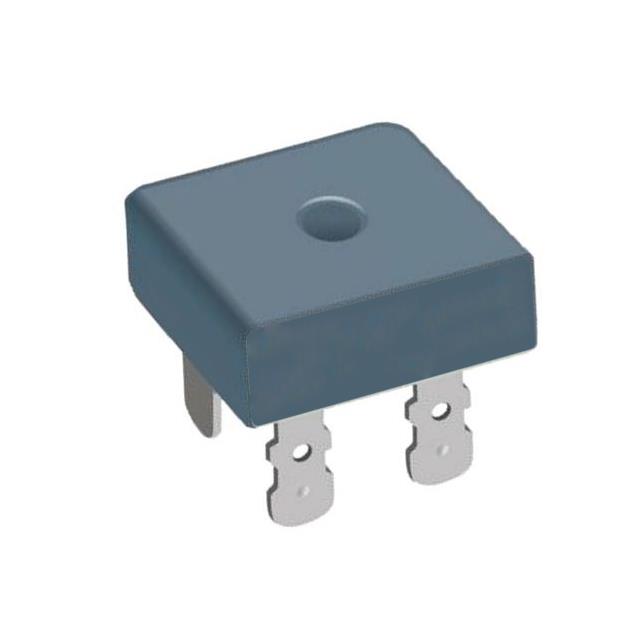
The KBPC10005-G is a single-phase bridge rectifier manufactured by Comchip Technology. It features an average forward rectified current of 10 A and a peak repetitive reverse voltage rating of 50 V. The component utilizes a glass passivated chip junction for reliability and is housed in a KBPC-4 through-hole package with solder pin termination. Key electrical specifications include a maximum forward voltage drop of 1.1 V at 10 A, a surge current capability of 220 A, and a maximum reverse leakage current of 10 µA at 25°C. The device operates within a temperature range of -55°C to +150°C.
Verify the specific manufacturer datasheet for the KBPC10005-G to confirm exact mechanical dimensions and thermal characteristics. Ensure compatibility with the target PCB footprint for the KBPC-4 package. Check for RoHS compliance status if required by the end application regulations. Confirm that the 50 V reverse voltage rating meets the peak inverse voltage requirements of the circuit design.
Select this component when a 10 A current rating and 50 V blocking voltage are sufficient for the application. Consider the KBPC-W variant if screw mounting is preferred over through-hole soldering. Evaluate thermal management requirements based on the 1.1 V forward voltage drop at full load. Compare against higher voltage ratings if system transients exceed 50 V.
This part belongs to the KBPC series of glass passivated single-phase bridge rectifiers from Comchip Technology. The series offers various current ratings from 1 A to 50 A and voltage ratings from 50 V to 1000 V. The KBPC10005-G specifically addresses low-voltage, moderate-current applications requiring robust standard recovery characteristics in a compact through-hole package.
Direct substitutes may include other manufacturers' KBPC-style bridge rectifiers with identical 10 A and 50 V ratings, such as those from Vishay or Littelfuse. Verify pinout compatibility and physical dimensions before substitution. Alternative packages like GBU or KBP require PCB redesign.
 KBPC10005-G

The activity of extra discounts on wholesale prices is in full swing…
Please fill in your contact information and we will send you the latest wholesale price list.