ChipApex | Global Electronic Components Supplier

SEARCH
Search Product
Search Post
— IC芯片 | 连接器 | 传感器 | 被动器件 —
Search productSearch post
— IC芯片 | 连接器 | 传感器 | 被动器件 —
Consult the customer manager about the wholesale price.
consultation hotline:86-132-6715-2157
email:[email protected]
Contact the product manager for consultation. One-stop consultation is available.
Do you want a lower wholesale price? Please send us your inquiry and we will reply immediately.
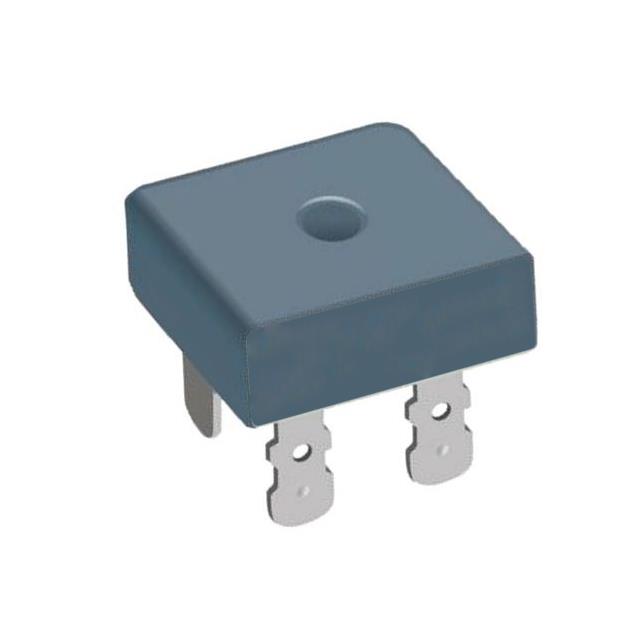
The KBPC1002-G is a single-phase bridge rectifier manufactured by Comchip Technology. It utilizes glass passivated chip junctions for enhanced stability and reverse leakage current resistance. The device features a peak forward surge current capability of 220 amperes at 60 Hz, providing robust overload protection. It operates within a junction temperature range of -55°C to +150°C. Key electrical parameters include a repetitive peak reverse voltage of 200V, an average forward rectified current of 10A, and a maximum non-repetitive peak forward surge current of 220A.
Verify the specific suffix and marking on the component body to confirm the exact voltage rating variant, as the KBPC series includes multiple voltage options. Ensure the procurement documentation explicitly states the 200V rating to distinguish it from other KBPC models. Confirm RoHS compliance status through the manufacturer's latest declaration before finalizing orders.
Select this component when a 10A continuous current rating and 200V blocking voltage are required in a through-hole package. Compare thermal dissipation requirements against the KBPC-4 package limitations. Consider the 220A surge rating for applications with significant inrush currents. Verify that the operating environment stays within the specified -55°C to +150°C junction temperature range.
This part belongs to the KBPC series of glass passivated bridge rectifiers from Comchip Technology. The series offers various voltage ratings while maintaining a consistent 10A current capacity and GBU-style mechanical footprint. It serves as a standard solution for general rectification tasks in consumer and industrial electronics where reliable through-hole mounting is preferred.
Compatible substitutes must match the 10A current rating, 200V reverse voltage, and KBPC-4 or equivalent through-hole package dimensions. Verify that alternative bridge rectifiers offer comparable surge current ratings and junction temperature limits to ensure circuit integrity without redesign.
 KBPC1002-G

The activity of extra discounts on wholesale prices is in full swing…
Please fill in your contact information and we will send you the latest wholesale price list.