ChipApex | Global Electronic Components Supplier

SEARCH
Search Product
Search Post
— IC芯片 | 连接器 | 传感器 | 被动器件 —
Search productSearch post
— IC芯片 | 连接器 | 传感器 | 被动器件 —
Consult the customer manager about the wholesale price.
consultation hotline:86-132-6715-2157
email:[email protected]
Contact the product manager for consultation. One-stop consultation is available.
Do you want a lower wholesale price? Please send us your inquiry and we will reply immediately.
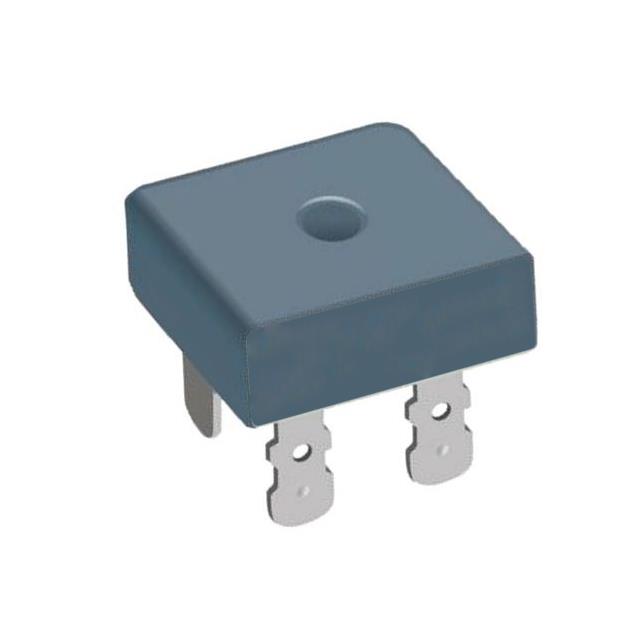
The KBPC2508-G is a single-phase bridge rectifier manufactured by Comchip Technology. It features an average forward rectified current of 25A and a maximum repetitive peak reverse voltage of 800V. The device utilizes glass passivated die construction to ensure low leakage current and high reliability under reverse bias conditions. Electrical isolation between the case and terminals is rated at 2500V, providing safety in high-voltage applications. The component is housed in an epoxy encapsulation with an integrated metal heat sink for efficient thermal dissipation. Terminals are plated leads designed for through-hole soldering, compliant with standard mechanical data requirements.
Verify the specific manufacturer designation when sourcing, as similar part numbers exist across different vendors such as Won-Top Electronics or Micro Commercial Components. Confirm that the suffix indicates the lead-free or halogen-free status if required by project specifications. Ensure the package type matches the intended PCB footprint and mounting style before finalizing procurement orders.
Select this component for applications requiring robust 25A continuous current handling with high voltage rejection capabilities. The integrated heatsink design makes it suitable for space-constrained environments where thermal resistance must be minimized without external cooling solutions. Verify that the operating junction temperature range aligns with the environmental conditions of the target equipment.
This component belongs to the broader family of glass passivated bridge rectifiers commonly used in industrial and consumer electronics. It shares functional similarities with other 25A series devices but is distinguished by its specific voltage rating and packaging configuration. The design prioritizes efficiency and durability in standard AC-to-DC conversion tasks.
Cross-reference with GBPC2508W-BP from Micro Commercial Components or FBPC2508WN from MIC for equivalent electrical characteristics. Ensure pinout compatibility and thermal resistance values match the existing design constraints before substituting.
 KBPC2508-G

The activity of extra discounts on wholesale prices is in full swing…
Please fill in your contact information and we will send you the latest wholesale price list.