ChipApex | Global Electronic Components Supplier

SEARCH
Search Product
Search Post
— IC芯片 | 连接器 | 传感器 | 被动器件 —
Search productSearch post
— IC芯片 | 连接器 | 传感器 | 被动器件 —
Consult the customer manager about the wholesale price.
consultation hotline:86-132-6715-2157
email:[email protected]
Contact the product manager for consultation. One-stop consultation is available.
Do you want a lower wholesale price? Please send us your inquiry and we will reply immediately.
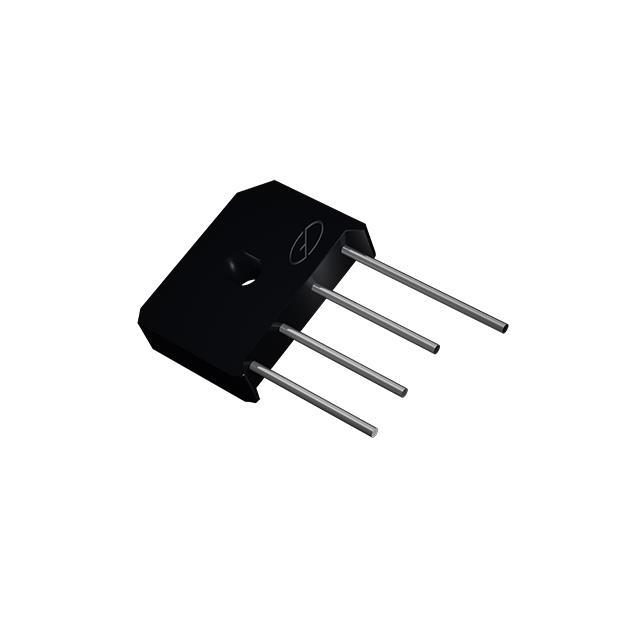
The Good-Ark Semiconductor KBU3510 is a single-phase bridge rectifier designed for high-current applications. It features a maximum repetitive peak reverse voltage of 1000 V and an average rectified output current of 35 A at a case temperature of 115°C. The device exhibits a maximum instantaneous forward voltage drop of 1.1 V per diode at 17.5 A and a maximum DC reverse current of 10 µA at rated blocking voltage. It supports a peak forward surge current of 400 A under specified conditions. The component operates within a junction temperature range of -55°C to +150°C and utilizes a KBU through-hole package with a thermal resistance from junction to case of 1.41 °C/W.
Verify the manufacturer part number KBU3510 against official Good-Ark Semiconductor documentation to confirm specifications. Ensure compatibility with the KBU package outline dimensions and thermal requirements during integration. Check RoHS compliance status if required by specific project regulations. Confirm lead availability and standard lead times directly with authorized distributors or the manufacturer before finalizing procurement plans.
Select the KBU3510 when a single-phase bridge rectifier with 1000 V reverse voltage and 35 A continuous current capacity is required. Consider the KBU package for through-hole mounting on printed circuit boards. Evaluate the thermal resistance and operating temperature range to ensure adequate heat dissipation in the target application environment compared to alternative packages.
The KBU3510 belongs to the KBU35xx series of single-phase bridge rectifiers manufactured by Good-Ark Semiconductor. This series covers reverse voltages ranging from 50 V to 1000 V while maintaining a consistent 35 A output current rating. The KBU3510 specifically represents the 1000 V variant within this lineup, sharing mechanical and electrical characteristics with other members of the family.
Cross-reference with other manufacturers offering KBU package bridge rectifiers rated for 1000 V and 35 A. Verify pinout compatibility and dimensional tolerances against the provided KBU outline drawing. Ensure equivalent thermal performance and surge current capabilities match the original design requirements.
 KBU3510

The activity of extra discounts on wholesale prices is in full swing…
Please fill in your contact information and we will send you the latest wholesale price list.