ChipApex | Global Electronic Components Supplier

SEARCH
Search Product
Search Post
— IC芯片 | 连接器 | 传感器 | 被动器件 —
Search productSearch post
— IC芯片 | 连接器 | 传感器 | 被动器件 —
Consult the customer manager about the wholesale price.
consultation hotline:86-132-6715-2157
email:[email protected]
Contact the product manager for consultation. One-stop consultation is available.
Do you want a lower wholesale price? Please send us your inquiry and we will reply immediately.
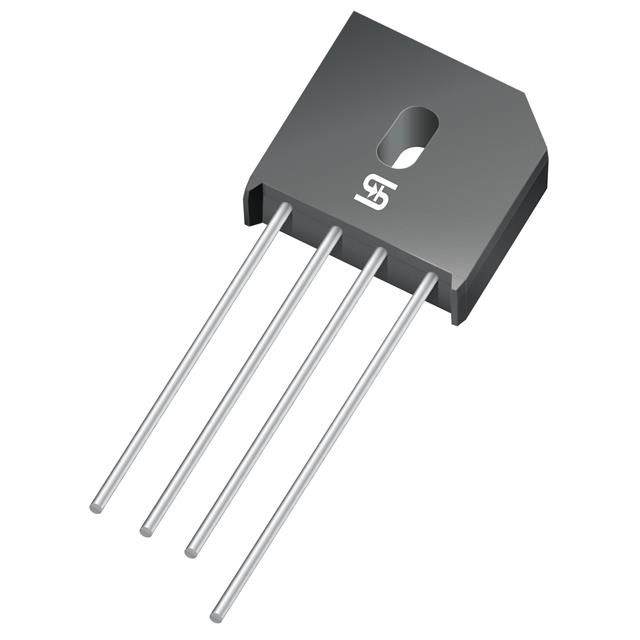
The KBU405G is a single-phase bridge rectifier manufactured by Taiwan Semiconductor Corporation, designed for general-purpose power supply applications. It features a peak repetitive reverse voltage (Vrrm) of 600 V and an average forward rectified current (Io) of 4 A. The device utilizes the KBU surface-mount package with four pins, providing a compact footprint suitable for automated assembly. Key electrical characteristics include a maximum non-repetitive peak forward surge current (Ifsm) of 200 A at 60 Hz sine wave, a typical peak forward voltage drop (Vf) of 1.0 V, and a low reverse leakage current (Ir) of 5 μA. The component operates reliably within a junction temperature range from -55°C to +150°C.
Verify the specific ordering suffix against the manufacturer's latest datasheet to ensure correct packaging and marking specifications. Confirm RoHS compliance status and lead times directly with authorized distributors or the manufacturer prior to procurement. Ensure the selected variant matches the required voltage and current ratings for the target application design.
Select this component when a surface-mount solution is required for 600 V applications with moderate current demands. Compare the KBU package dimensions against available board space constraints. Evaluate the thermal dissipation requirements relative to the ambient operating conditions and verify compatibility with standard reflow soldering profiles used in surface-mount assembly processes.
This part belongs to the KBU series of bridge rectifiers from Taiwan Semiconductor. The series offers various voltage ratings while maintaining a consistent surface-mount form factor. It serves as a standard component for converting AC input to DC output in consumer electronics and industrial equipment where space efficiency and reliable rectification are prioritized over through-hole mounting options.
Direct replacements must match the 600 V rating, 4 A current capacity, and KBU package outline. Verify pinout compatibility and thermal characteristics before substitution.
 KBU405G

The activity of extra discounts on wholesale prices is in full swing…
Please fill in your contact information and we will send you the latest wholesale price list.