ChipApex | Global Electronic Components Supplier
SEARCH
Search Product
Search Post
— IC芯片 | 连接器 | 传感器 | 被动器件 —
Search productSearch post
— IC芯片 | 连接器 | 传感器 | 被动器件 —
Consult the customer manager about the wholesale price.
consultation hotline:86-132-6715-2157
email:[email protected]
Contact the product manager for consultation. One-stop consultation is available.
Do you want a lower wholesale price? Please send us your inquiry and we will reply immediately.
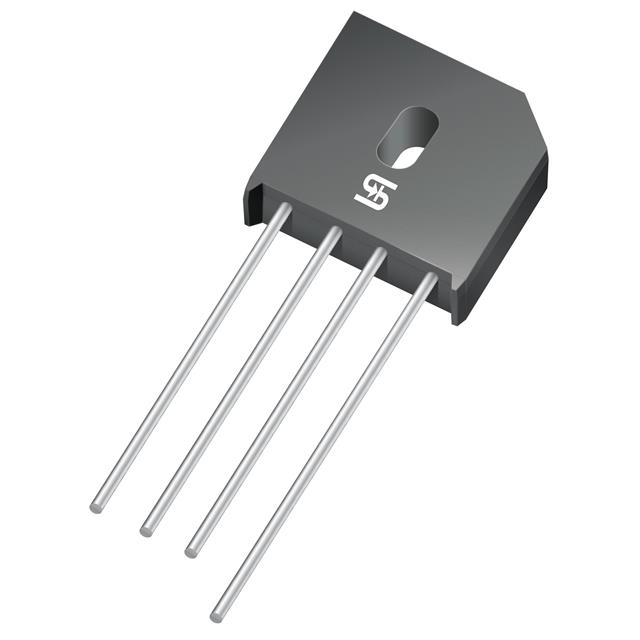
The KBU601G T0 is a single-phase bridge rectifier manufactured by Taiwan Semiconductor. It features a 6 A average forward current and a 50 V maximum repetitive peak reverse voltage. The device utilizes glass passivated junctions for enhanced reliability and offers a typical reverse leakage current of less than 0.1 μA. Designed for through-hole mounting in the KBU-4 package, it supports solder pin termination and operates within a temperature range of -55 °C to +150 °C. The component exhibits a maximum forward voltage drop of 1.1 V and can withstand a surge current of up to 200 A.
Verify the specific ordering suffix to confirm packaging type and halogen-free status. Ensure the procurement documentation matches the required voltage and current ratings for the target application. Cross-reference the manufacturer part number with official distributor catalogs to avoid counterfeit components. Confirm compliance with relevant environmental directives before finalizing purchase orders.
Select this component when a 6 A current rating and 50 V reverse voltage are sufficient for the design requirements. Consider the KBU-4 package dimensions for PCB layout constraints. Evaluate the thermal management needs given the operating temperature range. Compare alternative bridge rectifiers if higher voltage or current capabilities are necessary for the specific system architecture.
This component belongs to the KBU series of glass passivated bridge rectifiers from Taiwan Semiconductor. The series includes variants with different voltage ratings, such as the KBU603G, which shares similar mechanical and electrical characteristics but differs in peak reverse voltage specifications. The KBU601G T0 specifically denotes the 50 V variant within this family.
Direct substitutes include other KBU601G variants from different manufacturers that meet the same 6 A and 50 V specifications. Verify pinout compatibility and package dimensions before substitution. Components like the KBU601 from other brands may serve as alternatives if electrical parameters align precisely.
 KBU601G T0
The activity of extra discounts on wholesale prices is in full swing…
Please fill in your contact information and we will send you the latest wholesale price list.