ChipApex | Global Electronic Components Supplier
SEARCH
Search Product
Search Post
— IC芯片 | 连接器 | 传感器 | 被动器件 —
Search productSearch post
— IC芯片 | 连接器 | 传感器 | 被动器件 —
Consult the customer manager about the wholesale price.
consultation hotline:86-132-6715-2157
email:[email protected]
Contact the product manager for consultation. One-stop consultation is available.
Do you want a lower wholesale price? Please send us your inquiry and we will reply immediately.
The KTS1682EAY-TR is a high-current over-voltage protection switch manufactured by Kinetic Technologies, designed for power distribution applications. It features a single output capable of delivering up to 4 A with a maximum on-resistance of 38 mOhms. The device supports an input voltage range from 2.3 V to 28 V and includes current limiting set at 30 mA. Key timing specifications include a maximum turn-on time of 2 ms and a maximum turn-off time of 100 ns. It operates within a temperature range of -40°C to +85°C and is housed in a WLCSP-12 package.
Verify the specific suffix EAY against the manufacturer's official datasheet to ensure correct pinout and electrical characteristics. Confirm that the WLCSP-12 package dimensions match your PCB footprint requirements. Check RoHS compliance status through the provided documentation link. Ensure the operating voltage range aligns with your system's power supply specifications before finalizing procurement.
Select this component when designing circuits that require robust over-voltage protection combined with high current capacity. The 4 A output rating suits applications needing significant load driving capability. Consider the 38 mOhm on-resistance for thermal management calculations. The wide input voltage range allows flexibility in various power supply architectures. Verify compatibility with your system's control logic levels and switching speed requirements.
This part belongs to the Power Switch ICs - Power Distribution subcategory under Switch ICs. It is specifically engineered as an over-voltage protection device within Kinetic Technologies' portfolio. The WLCSP-12 packaging indicates a compact surface-mount solution suitable for space-constrained designs. It complements other load switches in the series by offering specialized surge protection features.
KTS1668EAY-TR offers similar overvoltage protection but supports up to 30 V input voltage instead of 28 V. Both parts share the same WLCSP-12 package and 4 A output current rating. Verify if the slight difference in maximum input voltage affects your specific application requirements.
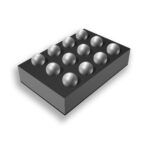 KTS1682EAY-TR
The activity of extra discounts on wholesale prices is in full swing…
Please fill in your contact information and we will send you the latest wholesale price list.