 ChipApex | Global Electronic Components Supplier

SEARCH
Search Product
Search Post
— IC芯片 | 连接器 | 传感器 | 被动器件 —
Search productSearch post
— IC芯片 | 连接器 | 传感器 | 被动器件 —
Consult the customer manager about the wholesale price.
consultation hotline:86-132-6715-2157
email:[email protected]
Contact the product manager for consultation. One-stop consultation is available.
Do you want a lower wholesale price? Please send us your inquiry and we will reply immediately.
L2006L8 is listed in the Triacs range at ChipApex. The manufacturer field lists Littelfuse Inc.. Its product description is TRIAC SENS GATE 200V 6A TO220. Review the specifications below when checking this part for your BOM.
The Littelfuse L2006L8 is a silicon bilateral voltage-triggered switch, commonly classified as a SIDACtor. It features glass-passivated junctions and is designed for AC circuit applications. The device switches on when the applied voltage exceeds its breakover point, conducting through a negative resistance region to a low on-state voltage until current drops below the holding threshold. Key electrical parameters include a breakover voltage of approximately 200 V, a holding voltage of roughly 10 V, and a peak on-state current capability of 6 A. It operates within a temperature range of -40°C to +150°C.
Verify the specific suffix 'L8' against official Littelfuse documentation to confirm package type and exact voltage ratings. Ensure compatibility with RoHS standards if required by the target application. Cross-reference datasheet values for breakover and holding currents before integration.
Select this component for high-voltage triggering applications requiring bilateral symmetry. Compare the 200 V breakover voltage against system requirements. Evaluate thermal management needs given the operating temperature range. Confirm that the 6 A peak current rating meets the load demands of the intended ignition or pulse generation circuit.
The L2006L8 belongs to the SIDACtor family of voltage-triggered switches. These devices offer higher power-handling capabilities compared to standard diacs. They are engineered for robust performance in harsh environments, providing reliable switching for high-voltage loads in industrial and consumer electronics.
Check for equivalent SIDACtor models from Littelfuse or other manufacturers with similar breakover voltages (around 200 V) and current ratings. Verify pinout compatibility and package dimensions for direct replacement.
It acts as a bilateral voltage-triggered switch that conducts current once the applied voltage exceeds its breakover threshold, used primarily for triggering thyristors or triacs.
No, it is specifically designed for AC circuit-oriented applications due to its bilateral switching nature.
The holding voltage is typically around 10 V, at which point the device turns off.
Explore related parts through Thyristors, Discrete Semiconductor Products, all product categories, ChipApex homepage.
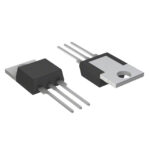 L2006L8

The activity of extra discounts on wholesale prices is in full swing…
Please fill in your contact information and we will send you the latest wholesale price list.





