 ChipApex | Global Electronic Components Supplier
SEARCH
Search Product
Search Post
— IC芯片 | 连接器 | 传感器 | 被动器件 —
Search productSearch post
— IC芯片 | 连接器 | 传感器 | 被动器件 —
Consult the customer manager about the wholesale price.
consultation hotline:86-132-6715-2157
email:[email protected]
Contact the product manager for consultation. One-stop consultation is available.
Do you want a lower wholesale price? Please send us your inquiry and we will reply immediately.
The L4985ATR is a continuous conduction mode (CCM) power factor controller designed for boost converters. It features an 800 V high-voltage startup block and proprietary THD optimization to ensure low harmonic distortion across all operating conditions. The device operates at a switching frequency of 65 kHz, suitable for applications ranging from hundreds of watts to several kilowatts. It includes integrated X-capacitor discharge circuitry to meet safety standards without external resistors. Protection mechanisms cover overvoltage, feedback loop faults, inductor saturation, and brownout events compliant with medical regulations.
Verify the suffix 'ATR' corresponds to the specific tape-and-reel packaging configuration and temperature grade defined in the official datasheet. Confirm that the 65 kHz switching frequency variant matches the system design requirements. Ensure compatibility with the SO8 package footprint during PCB layout validation. Cross-reference the ordering code with the manufacturer's current product availability status to avoid obsolete stock issues.
Select this component for CCM PFC applications requiring low component count and high efficiency. The integrated startup and discharge features simplify EMI filter design. The 65 kHz frequency option is appropriate for medium-power ranges up to several kilowatts. Consider the totem-pole drive capability when selecting external switching devices. Verify that the input voltage range and output power requirements align with the controller's operational limits.
The L4985 belongs to a family of peak current-mode PFC controllers offering high performance with minimal external components. It addresses stringent harmonic standards through advanced control algorithms. The device supports both A (65 kHz) and B (130 kHz) frequency options. It is designed for wide-range input voltages and provides robust protection features for critical power supply applications.
The L4986 is a functionally similar controller within the same family, offering identical core features and protection schemes. Both devices share the same pinout and control architecture. Selection between variants should focus on specific frequency requirements or packaging preferences as defined in the official substitution guidelines.
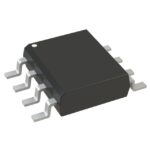 L4985ATR
The activity of extra discounts on wholesale prices is in full swing…
Please fill in your contact information and we will send you the latest wholesale price list.






