 ChipApex | Global Electronic Components Supplier

SEARCH
Search Product
Search Post
— IC芯片 | 连接器 | 传感器 | 被动器件 —
Search productSearch post
— IC芯片 | 连接器 | 传感器 | 被动器件 —
Consult the customer manager about the wholesale price.
consultation hotline:86-132-6715-2157
email:[email protected]
Contact the product manager for consultation. One-stop consultation is available.
Do you want a lower wholesale price? Please send us your inquiry and we will reply immediately.
The L6208PD013TR is a bipolar stepper motor controller and driver manufactured by STMicroelectronics. It utilizes DMOS technology to provide high-current output capabilities of 2.8 A per phase. The device operates within a supply voltage range of 8 V to 52 V and features a low quiescent supply current of 5 mA. Designed for surface-mount applications, it is housed in a PowerSO-36 package. The component supports an extended operating temperature range from -40°C to +150°C, ensuring reliability in demanding environments.
Verify the specific ordering suffix PD013TR to confirm the reel packaging format and quantity specifications. Ensure compatibility with the target application's voltage requirements, as the device supports up to 52 V. Confirm that the PowerSO-36 package dimensions align with the PCB layout constraints. Check humidity sensitivity handling requirements during storage and assembly processes. Validate that the operating temperature range meets the environmental conditions of the intended deployment scenario.
Select this component when bipolar stepper motor control is required with high current drive capabilities. Consider the PowerSO-36 package for surface-mount assembly needs. Evaluate the 52 V maximum supply voltage limit against system power rails. Assess the thermal management requirements given the high current output and operating temperature range. Compare against other series members if different packaging or current ratings are needed.
This part belongs to the L6208 series of motor controllers and drivers from STMicroelectronics. It is specifically designed for bipolar stepper motors using DMOS technology. The series offers various packaging options including tube and reel formats. It falls under the category of motor, motion, and ignition controllers and drivers within the manufacturer's portfolio.
L6208PD serves as the tube-packaged equivalent within the same series. L6208QTR offers the same functional specifications in a QFN package format. Verify pinout compatibility and thermal characteristics when substituting these alternatives.
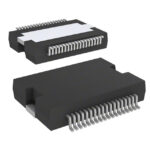 L6208PD013TR

The activity of extra discounts on wholesale prices is in full swing…
Please fill in your contact information and we will send you the latest wholesale price list.





