 ChipApex | Global Electronic Components Supplier

SEARCH
Search Product
Search Post
— IC芯片 | 连接器 | 传感器 | 被动器件 —
Search productSearch post
— IC芯片 | 连接器 | 传感器 | 被动器件 —
Consult the customer manager about the wholesale price.
consultation hotline:86-132-6715-2157
email:[email protected]
Contact the product manager for consultation. One-stop consultation is available.
Do you want a lower wholesale price? Please send us your inquiry and we will reply immediately.
The L6227D is a DMOS dual full bridge motor driver designed for brush DC and bipolar stepper motor control. It integrates two independent constant off-time PWM current controllers for chopping regulation. The device features non-dissipative overcurrent protection on high-side MOSFETs, thermal shutdown, cross-conduction protection, and undervoltage lockout. Operating supply voltage ranges from 8 V to 52 V with a peak output current of 2.8 A (1.4 A DC). Typical RDS(ON) is 0.73 Ω at Tj=25°C. It supports slow decay synchronous rectification and operates up to 100 kHz. Available in PowerSO36 and SO24 packages.
Verify the exact suffix against official STMicroelectronics documentation to confirm package type and temperature range. Ensure compatibility with system voltage requirements and thermal management needs. Confirm RoHS compliance status through the manufacturer's datasheet. Check for any specific ordering information or regional availability constraints directly from authorized distributors.
Select this component for applications requiring integrated power switching and current regulation in a single package. Consider the operating voltage range and current capabilities relative to the motor load. Evaluate thermal performance based on the expected duty cycle and ambient conditions. Verify interface logic compatibility with the controlling microcontroller or PLC.
The L6227 belongs to STMicroelectronics' L62xx series of DMOS dual full bridge drivers. This family combines isolated DMOS power transistors with CMOS and bipolar circuits on a single BCD technology chip. The series is widely used in motor control applications due to its integrated protection features and simplified external component requirements compared to discrete solutions.
L6227Q: Similar functionality but may differ in package or qualification standards. L6207: Full bridge driver without integrated PWM current controllers. L6226: Dual full bridge driver without integrated PWM current controllers. Verify pinout and feature set compatibility before substitution.
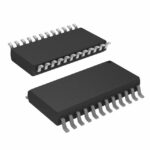 L6227D

The activity of extra discounts on wholesale prices is in full swing…
Please fill in your contact information and we will send you the latest wholesale price list.





