 ChipApex | Global Electronic Components Supplier

SEARCH
Search Product
Search Post
— IC芯片 | 连接器 | 传感器 | 被动器件 —
Search productSearch post
— IC芯片 | 连接器 | 传感器 | 被动器件 —
Consult the customer manager about the wholesale price.
consultation hotline:86-132-6715-2157
email:[email protected]
Contact the product manager for consultation. One-stop consultation is available.
Do you want a lower wholesale price? Please send us your inquiry and we will reply immediately.
The L6229DTR is a fully integrated three-phase motor driver and controller manufactured by STMicroelectronics. It utilizes BiCDMOS technology to combine isolated DMOS power transistors with CMOS and bipolar circuits on a single chip. The device supports an operating supply voltage range of 12V to 52V and delivers a peak output current of 2.8A, with a continuous DC current rating of 1.4A. It features a typical RDS(ON) of 0.73Ω at 25°C junction temperature and operates at frequencies up to 100kHz. The component is housed in a 24-SOIC package.
Verify the specific suffix 'DTR' corresponds to the tape-and-reel packaging format required for automated assembly processes. Confirm that the 24-SOIC package dimensions align with the target PCB footprint and soldering profile specifications. Ensure compatibility with the intended operating voltage range and thermal management requirements before finalizing procurement orders.
Select this component when a single-chip solution for three-phase BLDC motors is required, eliminating the need for external gate drivers or complex discrete logic. Consider its integrated Hall sensor decoding if sensor-based commutation is preferred over sensorless methods. Evaluate the 1.4A continuous current limit against the motor's nominal load requirements to ensure adequate performance margins.
The L6229 belongs to the STSPIN L62 family of motor drivers designed for robust industrial and automotive applications. Unlike the L6228 which targets bipolar stepper motors, the L6229 is specifically optimized for three-phase BLDC topologies. It represents a mature BCD technology implementation offering high integration levels for cost-sensitive designs.
Direct pin-to-pin replacements within the same family include the L6229Q variant, which offers enhanced quality specifications. For broader ecosystem compatibility, verify if the L6229PDTR variant meets specific packaging or testing requirements. Cross-reference with newer generations only if significant performance upgrades are necessary.
No, the datasheet specifies that the device includes decoding logic for single-ended Hall sensors, indicating it is designed for sensor-based commutation rather than sensorless operation.
The device employs a constant off-time PWM current controller to manage the phase currents effectively.
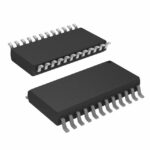 L6229DTR

The activity of extra discounts on wholesale prices is in full swing…
Please fill in your contact information and we will send you the latest wholesale price list.





