 ChipApex | Global Electronic Components Supplier
SEARCH
Search Product
Search Post
— IC芯片 | 连接器 | 传感器 | 被动器件 —
Search productSearch post
— IC芯片 | 连接器 | 传感器 | 被动器件 —
Consult the customer manager about the wholesale price.
consultation hotline:86-132-6715-2157
email:[email protected]
Contact the product manager for consultation. One-stop consultation is available.
Do you want a lower wholesale price? Please send us your inquiry and we will reply immediately.
The L6561D is a transition mode power factor corrector (PFC) controller manufactured by STMicroelectronics. It serves as an improved version of the L6560, featuring a superior multiplier for excellent total harmonic distortion (THD) in wide input voltage applications ranging from 85V to 265V AC. The device operates with micro-power start-up current and very low quiescent supply current to minimize power dissipation. It includes a disable function on the ZCD pin for lower standby consumption and offers precise adjustable output overvoltage protection without requiring external low-pass filters on the current sense.
Verify component status before procurement as the L6561D is classified as NRND (Not Recommended for New Designs). Confirm package availability in SOIC-8 format and ensure design compatibility with existing infrastructure given the discontinuation recommendation. Review latest datasheet revisions for any specific handling or testing requirements associated with end-of-life management.
Select this component for designs requiring transition mode PFC control with wide input voltage range capabilities. Consider its compatibility with the standard L6560 if migration is needed, noting the enhanced multiplier performance and reduced start-up current. Ensure the application benefits from the integrated current sense filter and the specific drive capability of the totem pole output stage for the intended power switch.
The L6561D belongs to the L6561 series of power factor correctors from STMicroelectronics. It is realized in mixed BCD technology, providing benefits such as a 1% precision internal reference voltage and soft output overvoltage protection. This series represents an evolution from the earlier L6560, offering improved performance metrics while maintaining functional compatibility for broader application support.
The L6561D is explicitly noted as Not Recommended for New Design (NRND). While the L6562 is described as pin-to-pin compatible with improved performance, official substitution data must be verified against current manufacturer recommendations. No other public confirmed substitute part numbers are available in the provided documentation.
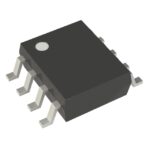 L6561D
The activity of extra discounts on wholesale prices is in full swing…
Please fill in your contact information and we will send you the latest wholesale price list.






