 ChipApex | Global Electronic Components Supplier
SEARCH
Search Product
Search Post
— IC芯片 | 连接器 | 传感器 | 被动器件 —
Search productSearch post
— IC芯片 | 连接器 | 传感器 | 被动器件 —
Consult the customer manager about the wholesale price.
consultation hotline:86-132-6715-2157
email:[email protected]
Contact the product manager for consultation. One-stop consultation is available.
Do you want a lower wholesale price? Please send us your inquiry and we will reply immediately.
The L6564TDTR is a current mode Power Factor Correction (PFC) controller operating in Transition Mode (TM). It serves as the compact version of the L6563S, embedding identical driver, reference, and control stages within a 10-pin SSOP package. The device features a highly linear multiplier and a special correction circuit to reduce mains current crossover distortion, ensuring wide-range operation with low Total Harmonic Distortion (THD). It utilizes a voltage feed-forward function for optimized loop stability and includes protections against overvoltage, feedback failures, brownouts, and inductor saturation.
Verify the specific suffix 'TDTR' indicates the tape-and-reel packaging variant of the L6564 family. Confirm that the 10-pin SSOP package matches the design requirements. Ensure compatibility with the intended switching frequency and gate drive capabilities. Cross-reference the manufacturer's latest datasheet for any updates on environmental compliance or pinout definitions before finalizing procurement specifications.
Select this component for designs requiring a compact solution for transition mode PFC applications. It is suitable for systems needing compliance with EN61000-3-2 standards. Consider its low startup current and fixed-off-time control capability when optimizing efficiency. Evaluate the 10-pin SSOP footprint constraints against available board space. Compare performance metrics against the larger L6563S if higher thermal dissipation or different packaging is required.
The L6564 series represents STMicroelectronics' solution for cost-effective and space-constrained power factor correction. As a derivative of the L6563, it maintains functional parity while reducing physical size through a 10-pin SSOP package. This integration supports widespread adoption in consumer electronics and IT equipment where board real estate is limited but high power factor performance is mandatory.
The L6563S is the primary functional equivalent offering identical electrical characteristics in a larger package. Verify pin-to-pin compatibility and thermal management requirements when substituting between these variants. Other transition mode controllers may require significant circuit redesign due to differences in control algorithms and driver strengths.
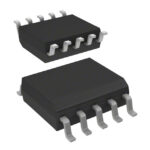 L6564TDTR
The activity of extra discounts on wholesale prices is in full swing…
Please fill in your contact information and we will send you the latest wholesale price list.






