 ChipApex | Global Electronic Components Supplier

SEARCH
Search Product
Search Post
— IC芯片 | 连接器 | 传感器 | 被动器件 —
Search productSearch post
— IC芯片 | 连接器 | 传感器 | 被动器件 —
Consult the customer manager about the wholesale price.
consultation hotline:86-132-6715-2157
email:[email protected]
Contact the product manager for consultation. One-stop consultation is available.
Do you want a lower wholesale price? Please send us your inquiry and we will reply immediately.
The L78L33CD is a three-terminal positive linear voltage regulator from the L78L series, manufactured by STMicroelectronics. It provides a fixed output voltage of 3.3 V with an output current capability up to 100 mA. The device features internal thermal overload protection and short-circuit protection. It operates within a junction temperature range of 0 °C to 125 °C for the C grade. The maximum DC input voltage is 30 V for this output voltage level. The quiescent current is typically 6 mA at 25 °C. Line regulation is specified at 150 mV (VI = 5.3 to 20 V) and load regulation at 60 mV (IO = 1 to 100 mA). Dropout voltage is typically 1.7 V. Supply voltage rejection ratio is typically 49 dB at 120 Hz.
Verify the specific package type required for the application, as the L78L33 part number exists in multiple packages including TO-92, SO-8, and SOT-89. Confirm that the 'CD' suffix corresponds to the desired package and tolerance variant by checking the manufacturer's official ordering information table. Ensure the selected component meets the thermal requirements for the intended operating environment.
Select this component when a fixed 3.3 V output is needed with moderate current demands up to 100 mA. Consider the thermal resistance characteristics of the chosen package if high power dissipation is expected. Verify that the input voltage remains within the 30 V maximum limit. Compare line and load regulation specifications against system requirements to ensure adequate stability.
The L78L33CD belongs to the L78L series of three-terminal positive regulators. This series is designed for general-purpose voltage regulation tasks. The 'C' designation indicates an 8% output voltage tolerance. The 'D' suffix typically denotes the SO-8 surface-mount package variant in STMicroelectronics nomenclature for this series.
Compatible replacements include other L78L33 variants from different manufacturers offering similar electrical characteristics. Cross-reference package pinouts carefully when substituting between through-hole and surface-mount versions. Verify thermal performance matches the original design constraints.
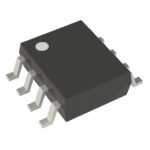 L78L33CD

The activity of extra discounts on wholesale prices is in full swing…
Please fill in your contact information and we will send you the latest wholesale price list.




