 ChipApex | Global Electronic Components Supplier

SEARCH
Search Product
Search Post
— IC芯片 | 连接器 | 传感器 | 被动器件 —
Search productSearch post
— IC芯片 | 连接器 | 传感器 | 被动器件 —
Consult the customer manager about the wholesale price.
consultation hotline:86-132-6715-2157
email:[email protected]
Contact the product manager for consultation. One-stop consultation is available.
Do you want a lower wholesale price? Please send us your inquiry and we will reply immediately.
The LA1117AADBADJ is a positive adjustable linear voltage regulator manufactured by Diodes Incorporated. It provides a single output with a current capability of 1A. The device operates within an input voltage range supporting outputs from 1.25V to 16.6V. Key electrical parameters include a low quiescent current consumption of 10mA. The component features integrated protection mechanisms for over current, over temperature, and transient voltage conditions. It is designed for surface mount installation in a SOT-223-3 package. The junction temperature operating range extends from -40°C to 125°C.
This component is officially classified as obsolete and no longer manufactured by Diodes Incorporated. Procurement should focus on verified substitute part numbers such as the AZ1117CH-ADJTRG1. Buyers must confirm availability through authorized distributors or secondary markets, as direct new production inventory is unavailable. Verify datasheet revisions and pin compatibility when sourcing replacements.
Select this component only if legacy compatibility with the SOT-223-3 package and 1A current rating is required. Consider the AZ1117 series as the primary modern alternative due to identical functional specifications. Evaluate thermal performance requirements given the 125°C junction limit. Ensure input voltage headroom supports the desired adjustable output range between 1.25V and 16.6V.
The LA1117AADBADJ belongs to the LM1117/LM317 family of adjustable linear regulators produced by Diodes Incorporated. It serves as a cost-effective solution for step-down voltage conversion in portable and fixed applications. The device is categorized under PMIC linear regulators. Its discontinuation reflects industry shifts toward newer generation components with improved efficiency or packaging options.
The AZ1117CH-ADJTRG1 is a confirmed public substitute recommended by the manufacturer. Both parts share the same adjustable functionality and current capabilities. Verify that the replacement package matches the existing PCB footprint requirements.
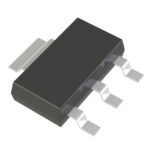 LA1117AADBADJ

The activity of extra discounts on wholesale prices is in full swing…
Please fill in your contact information and we will send you the latest wholesale price list.




