 ChipApex | Global Electronic Components Supplier
SEARCH
Search Product
Search Post
— IC芯片 | 连接器 | 传感器 | 被动器件 —
Search productSearch post
— IC芯片 | 连接器 | 传感器 | 被动器件 —
Consult the customer manager about the wholesale price.
consultation hotline:86-132-6715-2157
email:[email protected]
Contact the product manager for consultation. One-stop consultation is available.
Do you want a lower wholesale price? Please send us your inquiry and we will reply immediately.
The LA1781M-MPB-E is an integrated analog car radio tuner IC manufactured by onsemi. It consolidates all six functional blocks required for a complete car radio tuner onto a single chip, simplifying system design and reducing component count. The device supports both AM and FM frequency bands, providing comprehensive tuning capabilities for automotive audio applications. It is housed in a 64-pin BQFP (B-QFP) surface-mount package, measuring 14x14 mm, which facilitates PCB layout and thermal management. This integration allows for efficient signal processing within the specified automotive operating conditions.
Verify the specific manufacturer source to ensure authenticity, as counterfeit components exist in the market. Confirm that the received unit matches the exact part number LA1781M-MPB-E, including any suffix variations. Check the physical package dimensions and pin configuration against the official datasheet specifications before installation. Ensure storage and handling comply with moisture sensitivity level requirements if applicable.
Select this component when a highly integrated solution for analog car radio tuning is required. It is suitable for designs aiming to minimize bill-of-materials complexity by replacing multiple discrete tuner components with a single IC. Consider the 64-pin BQFP package constraints during PCB footprint design. Evaluate its compatibility with existing AM/FM antenna inputs and demodulation circuits in the target vehicle audio system.
The LA1781M belongs to a family of tuner ICs from onsemi, often compared with variants like the LA1787M or LA1780MA. These devices share similar integration philosophies but may differ in specific performance metrics or pinouts. The LA1781M specifically addresses the need for a complete tuner solution in a single package, distinguishing it from simpler demodulators or amplifiers found in other product lines.
Potential substitutes include the LA1787M-MPB-E and LA1780MA-A-MPB-E, which are part of the same tuner family. Verify pin-to-pin compatibility and functional equivalence before substitution. Review datasheets for differences in operating voltage ranges or specific feature sets to ensure they meet the original design requirements.
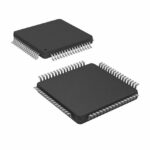 LA1781M-MPB-E
The activity of extra discounts on wholesale prices is in full swing…
Please fill in your contact information and we will send you the latest wholesale price list.





