 ChipApex | Global Electronic Components Supplier

SEARCH
Search Product
Search Post
— IC芯片 | 连接器 | 传感器 | 被动器件 —
Search productSearch post
— IC芯片 | 连接器 | 传感器 | 被动器件 —
Consult the customer manager about the wholesale price.
consultation hotline:86-132-6715-2157
email:[email protected]
Contact the product manager for consultation. One-stop consultation is available.
Do you want a lower wholesale price? Please send us your inquiry and we will reply immediately.
The LB11620T-TLM-E is a three-phase brushless DC (BLDC) motor controller manufactured by onsemi. It operates within a supply voltage range of 4.5 V to 5.5 V for logic and 8 V to 17 V for the power stage. The device features a single output configuration designed for driving BLDC motors. It is housed in a 24-pin TSSOP surface-mount package. The component supports an operating temperature range up to 100°C, suitable for various general-purpose motor control applications requiring integrated drive capabilities.
This part number is classified as obsolete and is no longer manufactured by onsemi. Distributors may offer limited remaining stock or refurbished units, but availability is not guaranteed. Verification of authenticity and lot date codes is critical when sourcing from secondary markets. Designers should prioritize replacement components with active status to ensure long-term supply chain stability and consistent quality assurance.
Engineers selecting this component must account for its obsolete status and potential supply constraints. The specific voltage ranges and current capabilities define its suitability for low-power BLDC applications. Alternative selection should focus on modern equivalents that maintain similar pinout compatibility and electrical characteristics while offering active manufacturing support and updated reliability data.
The LB11620T-TLM-E belongs to onsemi's legacy line of motor drivers and controllers. It represents an earlier generation of integrated solutions for three-phase brushless motors. The product family focuses on providing compact, cost-effective drive stages for consumer and industrial electronics. Its design reflects historical requirements for integrated protection and control functions in small form factor packages.
DigiKey lists available substitutes for this obsolete component. Engineers should evaluate these alternatives based on electrical parameter matching and mechanical footprint compatibility. Official onsemi documentation should be consulted to identify recommended cross-references that ensure functional equivalence in existing designs.
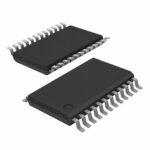 LB11620T-TLM-E

The activity of extra discounts on wholesale prices is in full swing…
Please fill in your contact information and we will send you the latest wholesale price list.





