ChipApex | Global Electronic Components Supplier

SEARCH
Search Product
Search Post
— IC芯片 | 连接器 | 传感器 | 被动器件 —
Search productSearch post
— IC芯片 | 连接器 | 传感器 | 被动器件 —
Consult the customer manager about the wholesale price.
consultation hotline:86-132-6715-2157
email:[email protected]
Contact the product manager for consultation. One-stop consultation is available.
Do you want a lower wholesale price? Please send us your inquiry and we will reply immediately.
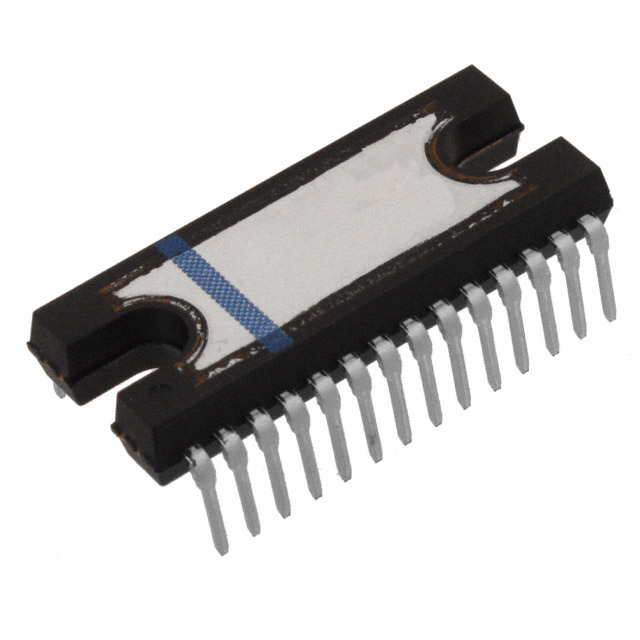
The LB11847-E is a dual DC motor driver IC designed for automotive applications, featuring integrated high-side and low-side power MOSFETs. It supports continuous output currents of up to 2.5 A per channel with peak capabilities exceeding standard operating limits. The device includes built-in protection mechanisms such as over-current shutdown, thermal shutdown, and reverse battery voltage tolerance. Operating from a supply voltage range of 6 V to 16 V, it utilizes a PWM input interface for precise speed control. The component is housed in a compact HTSSOP-20 package, ensuring reliable performance in harsh automotive environments while minimizing board space requirements.
Verify the exact suffix 'E' against the manufacturer's current datasheet to confirm pinout and packaging specifications. Ensure the procurement source provides original manufacturer documentation rather than third-party interpretations. Cross-reference the part number with official onsemi catalogs to validate availability and revision status before finalizing orders.
Select this component when designing automotive motor control circuits requiring dual-channel drive capability within a single package. Consider its integrated protection features for reducing external component count and enhancing system reliability. Evaluate the thermal performance characteristics relative to the expected load current and ambient temperature conditions during the design phase.
This device belongs to onsemi's automotive-grade motor driver family, specifically engineered for robust operation in vehicle electrical systems. It complements other single-channel drivers by offering dual functionality in a reduced footprint. The series emphasizes durability and ease of integration into existing automotive electronic architectures.
Consult official onsemi substitution guides for verified alternatives. Generic equivalents may lack specific automotive qualification or protection feature parity. Verify pin-to-pin compatibility and electrical parameter alignment before considering any substitute components.
 LB11847-E

The activity of extra discounts on wholesale prices is in full swing…
Please fill in your contact information and we will send you the latest wholesale price list.