 ChipApex | Global Electronic Components Supplier

SEARCH
Search Product
Search Post
— IC芯片 | 连接器 | 传感器 | 被动器件 —
Search productSearch post
— IC芯片 | 连接器 | 传感器 | 被动器件 —
Consult the customer manager about the wholesale price.
consultation hotline:86-132-6715-2157
email:[email protected]
Contact the product manager for consultation. One-stop consultation is available.
Do you want a lower wholesale price? Please send us your inquiry and we will reply immediately.
The LB11862MC-AH is a monolithic integrated circuit designed for driving two-phase stepper motors, featuring an internal chopper control system to regulate current. It operates within a supply voltage range of 4.5 V to 30 V and supports peak output currents up to 1.5 A per channel. The device incorporates thermal shutdown protection and overcurrent limiting to ensure reliability under varying load conditions. Its compact package design facilitates integration into space-constrained motor control applications requiring precise step resolution and efficient power management.
Verify the specific suffix 'AH' against official onsemi documentation to confirm exact temperature grade and packaging configuration. Ensure compatibility with existing PCB footprints and thermal management requirements before procurement. Cross-reference the latest datasheet revision for any updates to electrical characteristics or recommended operating conditions.
Select this component when designing systems requiring integrated chopper control for two-phase stepper motors without external current sensing resistors. Consider its 30 V maximum supply voltage and 1.5 A peak current capability relative to the motor's electrical specifications. Evaluate the need for its built-in protection features against potential fault conditions in the target application environment.
This part belongs to onsemi's family of bipolar stepper motor driver ICs. It is engineered for applications demanding reliable motion control with minimal external component count. The integration of chopper control and protection circuits distinguishes it from simpler H-bridge drivers, offering enhanced performance in precision positioning tasks across various electronic subsystems.
Consult official cross-reference lists for direct pin-compatible alternatives. Verify that substitute parts maintain identical chopper control functionality and current ratings. Ensure replacement components meet the same thermal and electrical specifications to avoid redesigning the host system.
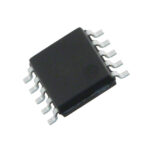 LB11862MC-AH

The activity of extra discounts on wholesale prices is in full swing…
Please fill in your contact information and we will send you the latest wholesale price list.





