ChipApex | Global Electronic Components Supplier

SEARCH
Search Product
Search Post
— IC芯片 | 连接器 | 传感器 | 被动器件 —
Search productSearch post
— IC芯片 | 连接器 | 传感器 | 被动器件 —
Consult the customer manager about the wholesale price.
consultation hotline:86-132-6715-2157
email:[email protected]
Contact the product manager for consultation. One-stop consultation is available.
Do you want a lower wholesale price? Please send us your inquiry and we will reply immediately.
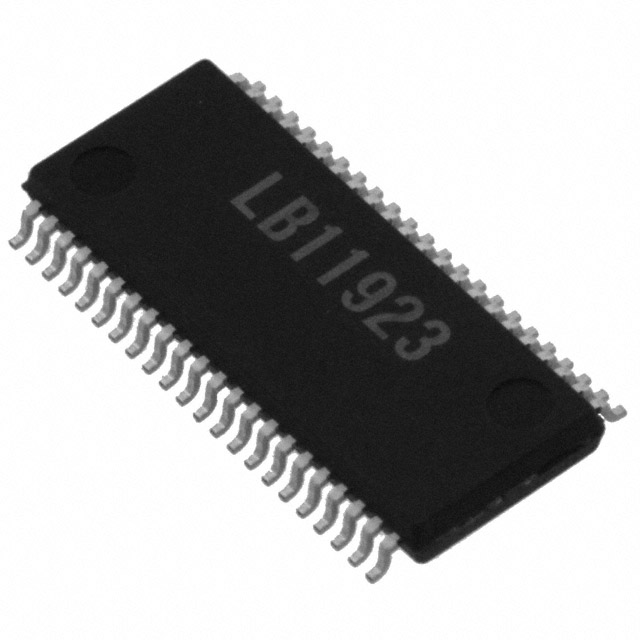
The LB11923V-TLM-E is a bipolar motor driver IC manufactured by onsemi, designed for brushless DC (BLDC) fan applications. It operates within a supply voltage range of 4.4V to 7V and features a 44-SSOP surface-mount package. The device integrates three half-bridge pre-drivers for commutation and direction management via PWM interfaces. It supports an operating temperature range from -20°C to 80°C and complies with RoHS3 standards.
This component is officially marked as obsolete or end-of-life by the manufacturer. Verification of current availability requires checking authorized distributors for remaining stock or surplus inventory. Designers should initiate replacement strategies immediately due to discontinuation status. Confirm RoHS3 compliance and moisture sensitivity level (MSL 3) requirements during procurement planning.
Select this part only if the application strictly requires a 4.4V to 7V supply range and a 44-pin SSOP footprint. Verify that the bipolar drive architecture aligns with the specific BLDC motor characteristics. Consider the limited operational temperature range (-20°C to 80°C) against environmental conditions. Due to its obsolete status, alternative components with similar pinouts and electrical specifications must be evaluated for long-term production viability.
Part of the LB11923 series from onsemi, utilizing Treo platform BCD technology. This series targets low-voltage fan motor control in consumer and industrial electronics. The device simplifies BLDC control by integrating necessary pre-driver stages, reducing external component count compared to discrete solutions.
Official substitutes are not explicitly listed in the provided documentation. Evaluate other onsemi BLDC drivers with compatible voltage ranges and package types. Cross-reference pinouts carefully when selecting third-party alternatives to ensure functional compatibility.
It supports bipolar PWM control for Brushless DC (BLDC) motors, specifically handling commutation and direction management.
No, the component is classified as obsolete or end-of-life by the manufacturer.
 LB11923V-TLM-E

The activity of extra discounts on wholesale prices is in full swing…
Please fill in your contact information and we will send you the latest wholesale price list.