 ChipApex | Global Electronic Components Supplier

SEARCH
Search Product
Search Post
— IC芯片 | 连接器 | 传感器 | 被动器件 —
Search productSearch post
— IC芯片 | 连接器 | 传感器 | 被动器件 —
Consult the customer manager about the wholesale price.
consultation hotline:86-132-6715-2157
email:[email protected]
Contact the product manager for consultation. One-stop consultation is available.
Do you want a lower wholesale price? Please send us your inquiry and we will reply immediately.
The LB1991V-TLM-E is a monolithic linear IC designed as a low-voltage, low-saturation, two-channel motor driver with bidirectional braking functionality. It provides constant-voltage regulated output for bidirectional operation, making it suitable for video equipment and portable devices. The device features a wide operating voltage range of 3.0 to 9.0 V and achieves a low saturation voltage of 0.40 V at an output current of 200 mA. It consumes minimal current in standby mode, typically 0.1 μA or less. The component includes a built-in reference voltage coupled to the input and allows for setting bidirectional constant-voltage regulation values. It is housed in a compact MFP14S package.
Verify the specific ordering suffix and package variant against the official onsemi datasheet to ensure compatibility with design requirements. Confirm that the MFP14S package dimensions and thermal characteristics meet the target application's constraints. Cross-reference the electrical specifications with the latest product documentation to avoid discrepancies from previous revisions.
Select this component for designs requiring bidirectional motor control with minimal quiescent current. The low saturation voltage makes it suitable for battery-powered portable devices where efficiency is critical. Ensure the operating voltage range aligns with the system's power supply rails. Consider the thermal dissipation capabilities within the compact package for high-current continuous operation scenarios.
This part belongs to the LB1837M series of monolithic linear ICs developed by onsemi. These drivers are specifically engineered for video and camera applications, offering reliable bidirectional operation in a small form factor. The series emphasizes low voltage operation and energy efficiency, catering to the demands of modern portable electronics and imaging devices.
The LB1837M is documented as a related monolithic linear IC with similar bidirectional motor driver functionality. Verify pinout compatibility and electrical parameter alignment before substitution.
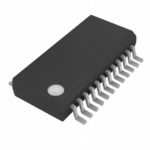 LB1991V-TLM-E

The activity of extra discounts on wholesale prices is in full swing…
Please fill in your contact information and we will send you the latest wholesale price list.





