 ChipApex | Global Electronic Components Supplier

SEARCH
Search Product
Search Post
— IC芯片 | 连接器 | 传感器 | 被动器件 —
Search productSearch post
— IC芯片 | 连接器 | 传感器 | 被动器件 —
Consult the customer manager about the wholesale price.
consultation hotline:86-132-6715-2157
email:[email protected]
Contact the product manager for consultation. One-stop consultation is available.
Do you want a lower wholesale price? Please send us your inquiry and we will reply immediately.
The LC4032C-5T44I is a Complex Programmable Logic Device (CPLD) belonging to the ispMACH 4000V/B/C/Z family, manufactured by Lattice Semiconductor. It features 32 macrocells and 36 logic blocks within a 44-pin TQFP package. The device supports In-System Programmability (ISP) via JTAG and utilizes non-volatile EEPROM memory for configuration storage. Key electrical parameters include a maximum operating frequency of 400 MHz, a typical propagation delay of 5 ns, and an I/O count of 30 user-accessible pins alongside 2 dedicated inputs. It operates with a core voltage of 1.8 V and supports 5 V tolerant I/O standards.
Verify component authenticity through authorized distributors as the part may be subject to obsolescence notices. Confirm specific suffix codes against official Lattice documentation to ensure correct temperature grade and package variant. Check for RoHS compliance status as older revisions may not meet current environmental regulations. Request detailed datasheets to validate pinout compatibility before integration into new designs.
Select this model when a compact CPLD solution with non-volatile configuration and high-speed performance is required. The 32-macrocell density suits moderate complexity logic functions. Ensure the design accommodates the 1.8 V core voltage requirement while leveraging the 5 V tolerant I/Os for mixed-voltage interfaces. Compare against the LC4032V or LC4032Z variants if automotive qualification or different voltage levels are necessary.
This component is part of the ispMACH 4000 family, which integrates features from previous isplsi and ispMACH 4A series. The 'C' designation typically indicates a specific voltage/core variation within the 4000V/B/C/Z lineup. It serves as a drop-in replacement for many legacy GAL and PAL devices in existing PCB layouts, offering enhanced density and speed without redesigning the physical footprint.
Direct pin-compatible substitutes within the same family include LC4032V-5T44I and LC4032Z-5T44I, provided voltage and temperature specifications align. Verify that alternative packages maintain the 44-TQFP form factor. Cross-reference timing parameters to ensure the replacement meets the system's maximum clock requirements.
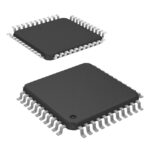 LC4032C-5T44I

The activity of extra discounts on wholesale prices is in full swing…
Please fill in your contact information and we will send you the latest wholesale price list.





