 ChipApex | Global Electronic Components Supplier

SEARCH
Search Product
Search Post
— IC芯片 | 连接器 | 传感器 | 被动器件 —
Search productSearch post
— IC芯片 | 连接器 | 传感器 | 被动器件 —
Consult the customer manager about the wholesale price.
consultation hotline:86-132-6715-2157
email:[email protected]
Contact the product manager for consultation. One-stop consultation is available.
Do you want a lower wholesale price? Please send us your inquiry and we will reply immediately.
The LC4032V-5TN44I is a Complex Programmable Logic Device (CPLD) from the Lattice ispMACH 4000V family. It features 32 macrocells and supports up to 30 user I/O lines within a 44-pin TQFP package. The device utilizes non-volatile EEPROM technology for configuration storage, enabling in-system programmability via JTAG. Key electrical parameters include a maximum operating frequency of 156 MHz and a typical propagation delay of 5 ns. It operates on a single 3.3V supply voltage with 5V-tolerant I/Os, supporting LVCMOS 3.3, LVTTL, and PCI interfaces.
Verify the specific speed grade suffix '5' against the required timing constraints for the target design. Confirm that the TQFP-44 package dimensions align with the PCB footprint requirements. Ensure the design tool version supports the ispMACH 4000V family for accurate place-and-route results. Check for end-of-life status or obsolescence notices from the manufacturer before finalizing procurement plans.
Select this component when a low-density CPLD with non-volatile configuration is required to replace legacy discrete logic. The 32 macrocell count is suitable for moderate complexity state machines and glue logic. The 5ns speed grade offers a balance between performance and power consumption. Consider higher density variants like the LC4064V if additional macrocells are needed for future scalability.
This part belongs to the ispMACH 4000V family, which integrates the ispLSI 2000 and ispMACH 4A architectures. The family is characterized by its SuperFAST™ performance and low power consumption due to a 1.8V core voltage. The LC4032V variant represents the entry-level density option within this series, providing 32 macrocells for cost-sensitive applications requiring reliable, reprogrammable logic.
Direct pin-to-pin replacements within the same package may include other speed grades of the LC4032V family, such as LC4032V-75TN44I, provided timing requirements allow for slower performance. Cross-family migration to newer Lattice devices requires schematic and code redesign.
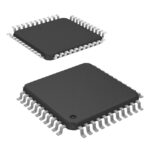 LC4032V-5TN44I

The activity of extra discounts on wholesale prices is in full swing…
Please fill in your contact information and we will send you the latest wholesale price list.





