 ChipApex | Global Electronic Components Supplier
SEARCH
Search Product
Search Post
— IC芯片 | 连接器 | 传感器 | 被动器件 —
Search productSearch post
— IC芯片 | 连接器 | 传感器 | 被动器件 —
Consult the customer manager about the wholesale price.
consultation hotline:86-132-6715-2157
email:[email protected]
Contact the product manager for consultation. One-stop consultation is available.
Do you want a lower wholesale price? Please send us your inquiry and we will reply immediately.
The LC71F7001VB-2-TLM-H is a capacitive touch sensor manufactured by Sanyo, now part of onsemi. This component is designed for detecting touch inputs through capacitive coupling mechanisms. It operates within standard electronic environments and supports surface-mount packaging formats including Reel and Cut Tape options. The device is classified under the Sensors sub-category with Touch Sensors as its specific product type. Moisture sensitivity is indicated as Yes, requiring appropriate handling during storage and assembly processes to maintain component integrity.
Verify manufacturer documentation for current status as sources indicate conflicting information regarding active production versus obsolescence. Confirm moisture sensitivity level specifications before storage planning. Ensure compatibility with reflow soldering profiles if applicable. Check regional distribution restrictions as some suppliers report limited availability or non-sale status in certain territories. Validate RoHS compliance details through official datasheets prior to procurement decisions.
Consider this component for designs requiring integrated capacitive touch detection without complex external circuitry. Evaluate package suitability for PCB space constraints given the surface-mount form factor. Assess environmental requirements against the stated moisture sensitivity classification. Review interface requirements to ensure compatibility with host system logic levels and communication protocols supported by the sensor architecture.
This part belongs to the LC71F7001VB series of capacitive touch sensors from Sanyo Semiconductor, which has been acquired by onsemi. The series includes variants such as LC71F7001VB-0-TLM-H and LC71F7001VB-3-TLM-H. These components are positioned within the broader sensor category, specifically targeting touch input detection applications in modern electronic devices requiring reliable capacitive sensing solutions.
LC71F7001VB-0-TLM-H and LC71F7001VB-3-TLM-H are documented variants within the same series. Verify pinout compatibility and functional equivalence before substitution. Cross-reference electrical specifications and package dimensions to ensure mechanical and electrical interchangeability in existing designs.
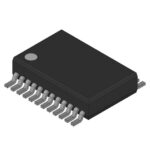 LC71F7001VB-2-TLM-H
The activity of extra discounts on wholesale prices is in full swing…
Please fill in your contact information and we will send you the latest wholesale price list.





