ChipApex | Global Electronic Components Supplier

SEARCH
Search Product
Search Post
— IC芯片 | 连接器 | 传感器 | 被动器件 —
Search productSearch post
— IC芯片 | 连接器 | 传感器 | 被动器件 —
Consult the customer manager about the wholesale price.
consultation hotline:86-132-6715-2157
email:[email protected]
Contact the product manager for consultation. One-stop consultation is available.
Do you want a lower wholesale price? Please send us your inquiry and we will reply immediately.
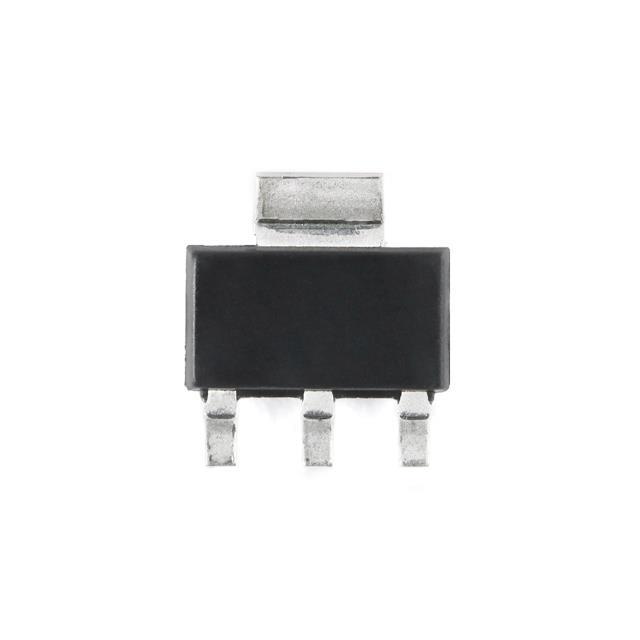
The UMW LD1117-3.3 is a positive low dropout linear regulator providing a fixed 3.3V output with a maximum current of 1A. It operates within an input voltage range up to 12V and features a typical dropout voltage of 1.2V at full load. The device offers high output accuracy, with a tolerance of less than 1.5% for the 3.3V version. Key electrical characteristics include a ripple rejection ratio of 75dB at 120Hz and a quiescent current of 5mA. It incorporates internal thermal shutdown and current limiting protection, ensuring reliable operation across a junction temperature range of -40°C to 125°C.
Verify the specific package variant (SOT-223-3L, SOT-89-3L, or TO-252-2L) required for your design, as the LD1117 series is available in multiple form factors. Confirm that the supplier provides the official UMW datasheet to ensure compliance with the specified electrical parameters. Check for RoHS compliance status if environmental regulations apply to your manufacturing process.
Select this component when a stable 3.3V rail is needed from higher input voltages with moderate current demands up to 1A. Ensure the application circuit includes the recommended output capacitance, typically a 22µF tantalum capacitor, to maintain stability. Consider the thermal resistance of the chosen package relative to the expected power dissipation to prevent triggering the internal thermal shutdown during continuous operation.
The LD1117 series by UMW belongs to the family of 1A positive LDO regulators designed for efficient power management in portable electronics. It utilizes an NPN pass transistor driven by a PNP, offering superior efficiency compared to traditional PNP-based designs. The series supports both fixed and adjustable output configurations, making it versatile for various voltage requirements in battery-powered systems.
LD1117V33 (STMicroelectronics)
The datasheet recommends using a 22µF tantalum capacitor for the output to ensure device stability across all operating conditions.
The device includes internal thermal shutdown to protect against excessive junction temperatures and current limiting to safeguard against short circuits or overloads.
 LD1117-3.3

The activity of extra discounts on wholesale prices is in full swing…
Please fill in your contact information and we will send you the latest wholesale price list.