 ChipApex | Global Electronic Components Supplier
SEARCH
Search Product
Search Post
— IC芯片 | 连接器 | 传感器 | 被动器件 —
Search productSearch post
— IC芯片 | 连接器 | 传感器 | 被动器件 —
Consult the customer manager about the wholesale price.
consultation hotline:86-132-6715-2157
email:[email protected]
Contact the product manager for consultation. One-stop consultation is available.
Do you want a lower wholesale price? Please send us your inquiry and we will reply immediately.
The LD1117V18 is a positive low dropout voltage regulator manufactured by STMicroelectronics, designed to deliver up to 950 mA of output current. It provides a fixed 1.8 V output with a typical dropout voltage of 1 V and a maximum of 1.1 V. The device operates within an input voltage range of 3.3 V to 15 V and maintains a supply voltage rejection ratio of 75 dB. It features internal thermal and current limiting protections, ensuring stability with a minimum 10 μF output capacitor. The unit is housed in a TO-220-3 through-hole package, suitable for applications requiring robust power management.
Verify the specific suffix and package configuration against the official datasheet before procurement, as variations exist within the LD1117 family. Confirm that the required output current and thermal dissipation capabilities align with the TO-220-3 package limitations. Ensure the application circuit includes the necessary input and output capacitors to maintain stability and prevent oscillation under all operating conditions.
Select this component when a fixed 1.8 V rail is needed with high current capability. The TO-220-3 package offers superior thermal performance compared to surface-mount options, making it suitable for higher power dissipation scenarios. Verify that the input voltage remains within the specified 3.3 V to 15 V range to ensure proper regulation and avoid excessive power loss or device damage.
This part belongs to the LD1117 series of adjustable and fixed low-dropout positive voltage regulators. The series is characterized by its ability to provide up to 800 mA to 950 mA of output current while maintaining a low dropout voltage. It is widely used in applications where noise-sensitive circuits require clean power from unregulated or switching sources.
Check for pin-compatible alternatives such as other manufacturers' LDOs offering similar 1.8 V fixed outputs and current ratings. Ensure any substitute matches the TO-220-3 package dimensions and thermal characteristics. Verify that the replacement device meets the same input voltage range and stability requirements regarding output capacitance.
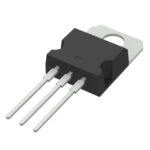 LD1117V18
The activity of extra discounts on wholesale prices is in full swing…
Please fill in your contact information and we will send you the latest wholesale price list.




