 ChipApex | Global Electronic Components Supplier
SEARCH
Search Product
Search Post
— IC芯片 | 连接器 | 传感器 | 被动器件 —
Search productSearch post
— IC芯片 | 连接器 | 传感器 | 被动器件 —
Consult the customer manager about the wholesale price.
consultation hotline:86-132-6715-2157
email:[email protected]
Contact the product manager for consultation. One-stop consultation is available.
Do you want a lower wholesale price? Please send us your inquiry and we will reply immediately.
The LD6816CX4/22P,315 is a fixed-output Low Dropout Regulator (LDO) from NXP Semiconductors. It provides a nominal output voltage of 2.2 V with a maximum continuous output current of 150 mA. The device operates within an input voltage range of 2.3 V to 5.5 V and features a typical dropout voltage of 45 mV at full load. It utilizes a WLCSP4 package with dimensions of 0.76 mm x 0.76 mm and a 0.4 mm pitch. Key electrical characteristics include a quiescent current of 70 µA in active mode and 0.1 µA in shutdown mode. The regulator includes integrated over-temperature protection, output current limiting, and ESD protection up to 10 kV HBM.
Verify the specific suffix '315' against official documentation to confirm reel packaging specifications. Confirm that the 'P' designation indicates the presence of the internal pull-down transistor for the output pin. Ensure compatibility with the required 0.7 µF minimum external load capacitance for stability. Check for any end-of-life or discontinuation notices as this component series may have limited availability.
Select this component when a compact footprint is critical due to its WLCSP4 package size. Choose this part if the application requires a low-ohmic output state during shutdown to rapidly discharge capacitive loads. Verify that the input voltage remains within the 2.3 V to 5.5 V range and that the load current does not exceed 150 mA. Consider the thermal resistance characteristics if operating near the upper ambient temperature limits.
This device belongs to the LD6816 series of ultra-low dropout regulators designed for portable electronics. The series offers various fixed output voltages ranging from 1.2 V to 3.6 V. The 'CX4/22P' variant specifically denotes the 2.2 V output version with the pull-down feature. It is manufactured using monolithic silicon technology to ensure reliability in space-constrained designs.
LD6816CX4/22H: Identical electrical performance but lacks the auto-discharge pull-down transistor, providing a high-ohmic state instead.
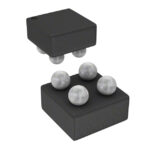 LD6816CX4/22P,315
The activity of extra discounts on wholesale prices is in full swing…
Please fill in your contact information and we will send you the latest wholesale price list.




