 ChipApex | Global Electronic Components Supplier
SEARCH
Search Product
Search Post
— IC芯片 | 连接器 | 传感器 | 被动器件 —
Search productSearch post
— IC芯片 | 连接器 | 传感器 | 被动器件 —
Consult the customer manager about the wholesale price.
consultation hotline:86-132-6715-2157
email:[email protected]
Contact the product manager for consultation. One-stop consultation is available.
Do you want a lower wholesale price? Please send us your inquiry and we will reply immediately.
The LDFMPT-TR is a linear voltage regulator IC from STMicroelectronics, housed in a PPAK package. It provides a positive adjustable output voltage ranging from 0.8 V to 12 V. The device supports a maximum output current of 500 mA with a typical dropout voltage of 125 mV. Key electrical specifications include a line regulation of 0.04%/V and load regulation of 0.4%/A. It features a quiescent current of 200 µA and a power supply rejection ratio (PSRR) of 60 dB. The unit operates with a maximum input voltage of 16 V and maintains an accuracy of 1%.
Verify the specific datasheet revision and ordering code suffixes to ensure compatibility with your design requirements. Confirm that the PPAK package dimensions align with your PCB footprint constraints. Check for any updated thermal derating curves or application notes relevant to your operating conditions. Ensure compliance with RoHS directives if required by your manufacturing standards. Cross-reference the part number with official STMicroelectronics distributors to avoid counterfeit components.
Select this component when a compact surface-mount solution is needed for adjustable voltage regulation. Consider its low dropout characteristic for applications where the input-to-output voltage differential is minimal. Evaluate the 500 mA current capability against your peak load requirements. Assess the thermal performance within the PPAK package for your specific ambient temperature conditions. Compare the PSRR and noise specifications against sensitive analog circuitry requirements.
This part belongs to the LDFM series of low-dropout regulators designed for space-constrained applications. It integrates protection features common to modern linear regulators. The PPAK package offers a small form factor suitable for dense PCB layouts. It complements other power management solutions in ST's portfolio for complete system power architectures.
Consult official STMicroelectronics documentation for direct pin-compatible substitutes. Verify equivalent electrical parameters such as output current and dropout voltage before substitution. Ensure thermal characteristics match the original design constraints.
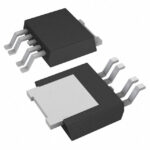 LDFMPT-TR
The activity of extra discounts on wholesale prices is in full swing…
Please fill in your contact information and we will send you the latest wholesale price list.




