 ChipApex | Global Electronic Components Supplier
SEARCH
Search Product
Search Post
— IC芯片 | 连接器 | 传感器 | 被动器件 —
Search productSearch post
— IC芯片 | 连接器 | 传感器 | 被动器件 —
Consult the customer manager about the wholesale price.
consultation hotline:86-132-6715-2157
email:[email protected]
Contact the product manager for consultation. One-stop consultation is available.
Do you want a lower wholesale price? Please send us your inquiry and we will reply immediately.
The LDH40PURY is a high-accuracy, adjustable low dropout (LDO) linear voltage regulator manufactured by STMicroelectronics. Designed for automotive and industrial environments, it supports an input voltage range from 3.3 V to 40 V, enabling compatibility with battery systems and load dump transients. The device delivers a guaranteed output current of 200 mA with an adjustable output voltage range spanning 1.2 V to 22 V. It features ultra-low quiescent current of 200 µA at no load and maintains a typical dropout voltage of 700 mV. Qualified under AEC-Q100 Grade 1 standards, it operates within a junction temperature range of -40 °C to +150 °C and includes internal protections such as thermal shutdown and current limiting.
Verify the specific suffix 'PURY' corresponds to the DFN-6 package with wettable flanks and automotive grade qualification. Confirm that the order quantity aligns with the manufacturer's reel specifications. Ensure the design accounts for the required small ceramic capacitors on both input and output terminals for stability. Validate that the application environment remains within the specified -40 °C to +150 °C operating temperature range.
Select this component when designing for automotive systems exposed to high transient voltages up to 40 V. It is suitable for space-constrained PCB designs due to its compact DFN footprint. Choose this regulator if the application demands minimal static power consumption during standby modes. Ensure the load requirements do not exceed the 200 mA continuous output current limit.
This part belongs to the LDH40 family of low dropout regulators. It shares the core architecture with other variants but is distinguished by its adjustable output voltage configuration and specific packaging. The family is engineered to provide robust performance in harsh electrical environments while maintaining high precision.
LDL40PURY: Offers similar form factor but limited to 12 V output. LDQ40PURY: Provides comparable performance with slight variations in output current ratings.
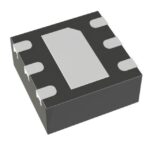 LDH40PURY
The activity of extra discounts on wholesale prices is in full swing…
Please fill in your contact information and we will send you the latest wholesale price list.




