ChipApex | Global Electronic Components Supplier
SEARCH
Search Product
Search Post
— IC芯片 | 连接器 | 传感器 | 被动器件 —
Search productSearch post
— IC芯片 | 连接器 | 传感器 | 被动器件 —
Consult the customer manager about the wholesale price.
consultation hotline:86-132-6715-2157
email:[email protected]
Contact the product manager for consultation. One-stop consultation is available.
Do you want a lower wholesale price? Please send us your inquiry and we will reply immediately.
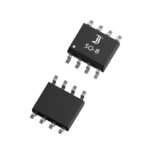
The LDI1117-3.3D is a fixed-output low dropout linear voltage regulator manufactured by Diotec Semiconductor. It provides a nominal output voltage of 3.3 V with a tolerance of ±1%, ranging from 3.267 V to 3.333 V. The device supports a maximum output current of 1.35 A and operates with a maximum input voltage of 20 V. Key electrical parameters include a typical dropout voltage of 1.15 V at 1 A, a line regulation of 6 mV, and a load regulation of 10 mV. It features a typical power supply rejection ratio (PSRR) of 50 dB and a maximum junction operating temperature of +150 °C. The component is housed in an 8-SO surface-mount package.
Verify the specific suffix 'D' corresponds to the SOIC-8 package variant, as other suffixes indicate different form factors like SOT-223 or SOT-89. Confirm RoHS compliance status and moisture sensitivity level requirements against your assembly process specifications. Ensure the input voltage does not exceed the 20 V absolute maximum rating during operation.
Select this component when a fixed 3.3 V rail is required with up to 1.35 A load capability in a compact surface-mount footprint. Consider the 20 V input rating if the source voltage varies significantly. Compare thermal dissipation requirements against the SOIC-8 package's heat dissipation capabilities relative to alternative packages like SOT-223 for higher current densities.
This part belongs to the LDI1117 series of low dropout regulators from Diotec Semiconductor. The series offers various fixed output voltages including 1.2 V, 1.5 V, 1.8 V, 2.5 V, and 5.0 V. The LDI1117-3.3D specifically utilizes an 8-pin SOIC package, distinguishing it from the H-series which uses SOT-223 and the U-series which uses SOT-89.
Direct pin-compatible substitutes may include other LDOs with 3.3 V output and similar current ratings, such as the LM1117-3.3 in SOIC-8. Verify that any replacement matches the 20 V input limit and thermal characteristics. Cross-reference package dimensions to ensure mechanical fit within the existing PCB layout.
 LDI1117-3.3D
The activity of extra discounts on wholesale prices is in full swing…
Please fill in your contact information and we will send you the latest wholesale price list.