 ChipApex | Global Electronic Components Supplier
SEARCH
Search Product
Search Post
— IC芯片 | 连接器 | 传感器 | 被动器件 —
Search productSearch post
— IC芯片 | 连接器 | 传感器 | 被动器件 —
Consult the customer manager about the wholesale price.
consultation hotline:86-132-6715-2157
email:[email protected]
Contact the product manager for consultation. One-stop consultation is available.
Do you want a lower wholesale price? Please send us your inquiry and we will reply immediately.
The LDK220M50R is a low-dropout linear voltage regulator manufactured by STMicroelectronics, designed for surface-mount applications. It provides a fixed 5V output with a maximum current of 200mA. The device operates within an input voltage range of 2.5V to 13.2V and features a typical dropout voltage of 100mV at 100mA load. Key electrical parameters include a quiescent current of 55µA (typical) and 1µA in shutdown mode. It offers high power supply rejection ratio (PSRR) and maintains output voltage tolerance within ±2.0% at 25°C. The component supports ceramic capacitors as small as 1µF for stability.
Verify the specific package variant, as the LDK220 series includes SOT-23-5L, SOT-323-5L, SOT-89, and DFN6 options. Confirm that the M50R suffix corresponds to the required fixed 5V output and packaging type. Ensure compatibility with the intended PCB footprint and thermal requirements before finalizing procurement orders.
Select this regulator when a compact solution with low static current is required for 5V distribution from varying input sources. It is suitable for designs where space constraints favor small surface-mount packages like DFN or SOT-23. Consider its 200mA limit for load requirements and verify that the input voltage remains within the specified 2.5V to 13.2V window for optimal performance.
This component belongs to the LDK220 family of low-dropout regulators known for their low noise and low quiescent current characteristics. The family is engineered for industrial and consumer applications requiring efficient power management in small form factors. It integrates advanced protection features while maintaining high accuracy and stability with minimal external components.
Direct substitutes may include other LDK220 variants with different output voltages or packages, such as LDK220PU50R. Verify pinout compatibility and thermal dissipation capabilities when replacing. Cross-reference datasheets to ensure equivalent PSRR and dropout voltage specifications match the original design requirements.
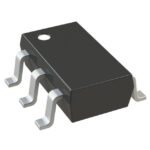 LDK220M50R
The activity of extra discounts on wholesale prices is in full swing…
Please fill in your contact information and we will send you the latest wholesale price list.




