 ChipApex | Global Electronic Components Supplier
SEARCH
Search Product
Search Post
— IC芯片 | 连接器 | 传感器 | 被动器件 —
Search productSearch post
— IC芯片 | 连接器 | 传感器 | 被动器件 —
Consult the customer manager about the wholesale price.
consultation hotline:86-132-6715-2157
email:[email protected]
Contact the product manager for consultation. One-stop consultation is available.
Do you want a lower wholesale price? Please send us your inquiry and we will reply immediately.
The LDK715PU42R is a fixed-output linear voltage regulator from the STMicroelectronics LDK715 series, providing a stable 4.2 V output with a maximum current of 85 mA. It operates within an input voltage range of 4.3 V to 24 V and features a typical dropout voltage of 500 mV at full load. The device maintains an ultra-low quiescent current of 5 μA under full load conditions. It includes internal protection mechanisms such as short-circuit current limiting and thermal shutdown. The component is housed in an 8-lead DFN 3x3 mm package and supports operation across a temperature range of -40 °C to +125 °C.
Verify the specific output voltage configuration during procurement, as the LDK715 series offers multiple fixed options including 3.3 V, 4.2 V, and 5.0 V. Confirm that the ordering suffix corresponds to the required 4.2 V variant. Ensure compatibility with the 8-QFN 3x3 mm package footprint for PCB layout. Check RoHS compliance status if restricted substances are a project constraint.
Select this component when a high input voltage range up to 24 V is required alongside minimal standby power consumption. The 4.2 V fixed output is suitable for specific rail requirements where standard 3.3 V or 5 V rails are insufficient. Consider the 85 mA output limit against peak load demands. The DFN8 package is appropriate for space-constrained designs requiring surface mount assembly.
The LDK715PU42R belongs to the LDK715 family of high-voltage, low-quiescent-current LDO regulators manufactured by STMicroelectronics. This series is designed to replace older linear regulators in applications demanding lower power dissipation and wider input voltage tolerance. The family shares common architectural features but varies by output voltage and package type, specifically offering SOT23-5 and DFN8 configurations.
Direct substitutes include other LDK715 variants with different fixed output voltages, such as LDK715PU33R (3.3 V) or LDK715PU50R (5.0 V), provided the system voltage requirement changes. Cross-family replacements may require verification of pin compatibility and thermal performance characteristics.
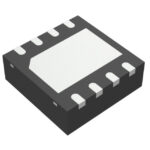 LDK715PU42R
The activity of extra discounts on wholesale prices is in full swing…
Please fill in your contact information and we will send you the latest wholesale price list.




