ChipApex | Global Electronic Components Supplier
SEARCH
Search Product
Search Post
— IC芯片 | 连接器 | 传感器 | 被动器件 —
Search productSearch post
— IC芯片 | 连接器 | 传感器 | 被动器件 —
Consult the customer manager about the wholesale price.
consultation hotline:86-132-6715-2157
email:[email protected]
Contact the product manager for consultation. One-stop consultation is available.
Do you want a lower wholesale price? Please send us your inquiry and we will reply immediately.
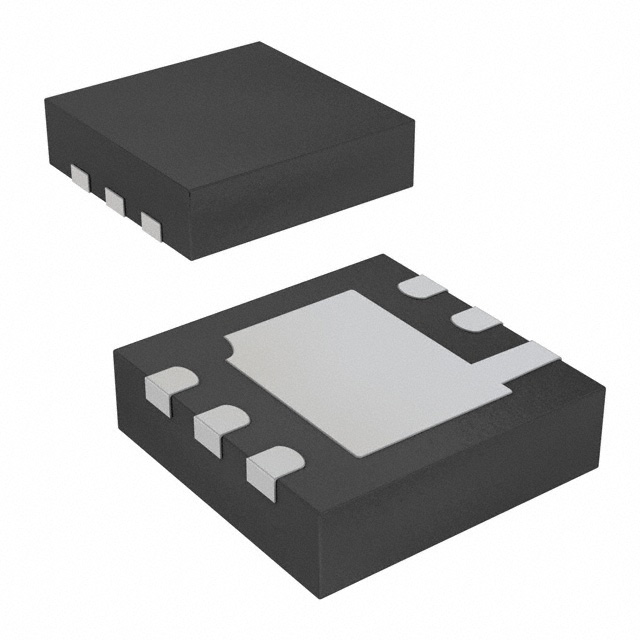
The LDLN015PU30R is a low-dropout linear voltage regulator manufactured by STMicroelectronics, designed for ultra-low noise applications. It provides a fixed 3 V output with a maximum current of 150 mA from an input voltage range of 2.1 V to 5.5 V. The device features a typical dropout voltage of 86 mV and an ultra-low RMS noise of 6.3 µV in the 10 Hz to 100 kHz band. Quiescent current is typically 70 µA at full load. It includes logic-controlled shutdown with consumption below 1 µA, short-circuit protection, and thermal limiting. The component is housed in a DFN-6 (2x2 mm) package and operates between -40 °C and 125 °C.
Verify the specific suffix PU30R against the official datasheet to confirm the 3 V fixed output voltage and DFN-6 package configuration. Confirm RoHS compliance status as indicated in manufacturer documentation. Note that this component may be classified as NRND or obsolete; check current production status directly with STMicroelectronics before finalizing design-in decisions.
Select this regulator when ultra-low noise is critical for signal integrity in low-power systems. Ensure the input voltage remains within the 2.1 V to 5.5 V range to maintain regulation. Verify that the required output current does not exceed 150 mA. Consider the DFN-6 package size constraints and thermal dissipation requirements for the specific PCB layout.
This component belongs to the LDLN015 series of ultra-low noise linear regulators from STMicroelectronics. The series is engineered for space-constrained portable electronics requiring high precision. The LDLN015PU30R specifically denotes the 3 V output variant within this family, sharing common features like ceramic capacitor stability and low quiescent current across all output voltage options.
Consult the official LDLN015 datasheet for direct pin-compatible alternatives with different output voltages or updated manufacturing statuses. Verify electrical parameters such as noise density and PSRR against potential substitutes to ensure compatibility with sensitive load requirements.
 LDLN015PU30R
The activity of extra discounts on wholesale prices is in full swing…
Please fill in your contact information and we will send you the latest wholesale price list.