 ChipApex | Global Electronic Components Supplier
SEARCH
Search Product
Search Post
— IC芯片 | 连接器 | 传感器 | 被动器件 —
Search productSearch post
— IC芯片 | 连接器 | 传感器 | 被动器件 —
Consult the customer manager about the wholesale price.
consultation hotline:86-132-6715-2157
email:[email protected]
Contact the product manager for consultation. One-stop consultation is available.
Do you want a lower wholesale price? Please send us your inquiry and we will reply immediately.
The LE50CD-TR is a very low-dropout (LDO) linear voltage regulator from STMicroelectronics, featuring an inhibit function. It provides a fixed positive output voltage of 5 V with a maximum output current of 100 mA. The device operates within an input voltage range supporting a typical dropout voltage of 0.2 V at full load. It exhibits a typical quiescent current of 80 µA and maintains line regulation of 18 mV and load regulation of 50 mV. The component functions reliably across an operating temperature range from -40 °C to +125 °C and is housed in an 8-SOIC package.
Verify the specific suffix 'CD' confirms the SO-8 package and standard performance grade. Confirm the '-TR' suffix indicates tape-and-reel packaging format. Ensure the part number matches the exact 5 V fixed output variant. Cross-reference the manufacturer's latest datasheet for any updates on environmental compliance or pinout configurations before finalizing procurement orders.
Select this component when a fixed 5 V output is required with minimal voltage drop under light loads up to 100 mA. The integrated inhibit feature allows for system-level power switching without external transistors. Consider the SO-8 package for surface-mount assembly constraints. Evaluate thermal dissipation requirements based on the input-output voltage differential and ambient operating conditions to ensure reliability within the specified temperature range.
This LDO belongs to the LEXX family of regulators designed for low-power applications. It complements other variants offering different output voltages or higher current capabilities. The series emphasizes low quiescent current to extend battery life in portable devices. It serves as a direct replacement for older generation fixed-voltage regulators in modern compact designs.
Direct substitutes include LF50CDT-TR for TO-252-3 packaging or KF50BD-TR for SOIC-8 with higher current capability. Verify pin compatibility and thermal performance when substituting. Ensure the alternative part supports the inhibit function if system power control is required.
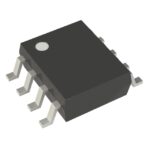 LE50CD-TR
The activity of extra discounts on wholesale prices is in full swing…
Please fill in your contact information and we will send you the latest wholesale price list.




