 ChipApex | Global Electronic Components Supplier

SEARCH
Search Product
Search Post
— IC芯片 | 连接器 | 传感器 | 被动器件 —
Search productSearch post
— IC芯片 | 连接器 | 传感器 | 被动器件 —
Consult the customer manager about the wholesale price.
consultation hotline:86-132-6715-2157
email:[email protected]
Contact the product manager for consultation. One-stop consultation is available.
Do you want a lower wholesale price? Please send us your inquiry and we will reply immediately.
The LED7707TR is a monolithic LED driver IC featuring an integrated boost converter and six controlled current generators, designed for LCD panel backlighting. It supports an input voltage range of 4.5 V to 36 V and delivers up to 85 mA per channel with ±2% current matching. The device utilizes peak current-mode control with an adjustable switching frequency from 250 kHz to 1 MHz. Key specifications include a maximum output voltage of 36 V, PWM dimming capability with less than 10 μs minimum on-time, and operation within a temperature range of -40°C to +150°C TJ.
Verify the specific suffix (e.g., TR) against the manufacturer's official datasheet to confirm packaging type and reel specifications. Ensure that the ordered component matches the exact part number variant required for your design, as suffixes may indicate differences in tape-and-reel dimensions or moisture sensitivity levels. Cross-reference the ordering code with authorized distributors to guarantee authenticity and traceability.
Select this component when designing multi-row LED arrays requiring high current matching accuracy and integrated boost regulation. The wide input voltage range and adjustable switching frequency offer flexibility for various power supply configurations. Consider the thermal performance and package size if space constraints are critical, and verify that the application environment aligns with the specified operating temperature range.
The LED7707 belongs to STMicroelectronics' dedicated LED lighting driver family, specifically engineered for medium-current applications. It combines power management and driver functions into a single chip to reduce external component count. This integration simplifies the design process for backlighting solutions while maintaining high efficiency and reliability standards for commercial and industrial displays.
Publicly confirmed substitute part numbers are not available in the provided documentation. Evaluate alternative drivers based on pin compatibility, current capabilities, and boost topology requirements. Verify that any replacement meets the same electrical specifications and thermal characteristics for direct integration.
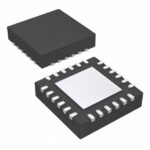 LED7707TR

The activity of extra discounts on wholesale prices is in full swing…
Please fill in your contact information and we will send you the latest wholesale price list.





